

In ecommerce, brand reputation is often misunderstood. Many store owners think of it as something abstract—reviews, ratings, social media sentiment, or how “known” their store feels. In reality, brand reputation is one of the most powerful economic levers an ecommerce business can build. The benefits of brand reputation extend far beyond trust badges and five-star reviews. They influence acquisition costs, conversion rates, pricing power, operational efficiency, hiring quality, platform approvals, SEO visibility, crisis resilience, and even long-term exit valuation.
For ecommerce brands competing in saturated markets, the benefits of brand reputation are not optional. They determine whether you grow profitably or bleed margins. They influence whether marketplaces, payment providers, logistics partners, influencers, and affiliates choose to work with you—or avoid you.
This guide explores the benefits of brand reputation specifically from an ecommerce business perspective. It avoids surface-level branding advice and instead focuses on measurable outcomes, internal efficiencies, and long-term defensibility. You will see how the benefits of brand reputation compound over time, how they reduce costs across the funnel, and why reputation increasingly matters more than product features in modern ecommerce.
Table of Contents
The Overall Benefits of Brand Reputation
Before diving into advanced and underrated benefits, it is important to briefly acknowledge the baseline advantages of brand reputation in ecommerce. These are widely discussed and expected by both users and search engines.
Trust and Credibility
Customers are more likely to purchase from ecommerce stores they trust. Trust reduces fear around payment security, delivery reliability, return policies, and product authenticity. The benefits of brand reputation here include higher checkout completion rates and lower hesitation during first-time purchases. In ecommerce, trust is not theoretical—it shows up as fewer abandoned carts, fewer pre-sale questions, and faster decisions.
Customer Loyalty
A positive reputation encourages repeat purchases. Loyal customers return without needing retargeting ads or heavy discounts, improving lifetime value and stabilizing revenue. Over time, loyalty driven by reputation becomes one of the strongest drivers of predictable ecommerce cash flow.
Brand Recognition
Recognizable ecommerce brands experience faster decision-making. Shoppers scanning search results, ads, or marketplace listings are more likely to click brands they recognize. Recognition reduces cognitive load and accelerates purchasing behavior.
Word-of-Mouth and Referrals
Satisfied customers naturally recommend reputable ecommerce stores to friends, family, and online communities. This creates organic growth with near-zero acquisition cost and improves the efficiency of every marketing channel.
Competitive Advantage
In crowded ecommerce niches, reputation becomes a differentiator when products, prices, and delivery timelines look similar. Buyers default to the brand that feels safer.
These benefits matter—but they are only the surface. The real benefits of brand reputation emerge when you analyze how it reshapes ecommerce economics.
Why Brand Reputation Matters More Online Than Offline
Ecommerce buyers cannot touch products, speak to staff face-to-face, or instantly resolve issues in person. Every purchase is made on trust proxies: reviews, brand signals, perceived professionalism, and past reputation.
Because of this, the benefits of brand reputation are amplified in ecommerce compared to traditional retail. A single negative signal can stop a sale. A strong reputation, however, removes friction at every step—from ad click to unboxing experience.
In ecommerce, reputation replaces physical presence. It acts as the salesperson, the store environment, and the customer service desk all at once.
How Brand Reputation Reduces Ecommerce Risk Perception
Risk perception is the silent killer of ecommerce conversions. Buyers worry about:
- Product quality mismatches
- Delivery delays
- Payment security
- Refund complexity
- Post-purchase support
The benefits of brand reputation lie in systematically lowering perceived risk. When customers feel safe, they stop overanalyzing decisions. This leads to faster checkouts, fewer support tickets, and higher satisfaction.
Strong reputation shifts the buyer mindset from “Should I trust this store?” to “Which product should I choose?”—a critical transition for conversion optimization.
Benefits of Brand Reputation
1. Brand Reputation as a Cost-Reduction Engine in Ecommerce
One of the most overlooked benefits of brand reputation is its ability to lower costs across the entire ecommerce operation. Unlike short-term optimizations, reputation-driven cost reduction compounds over time.
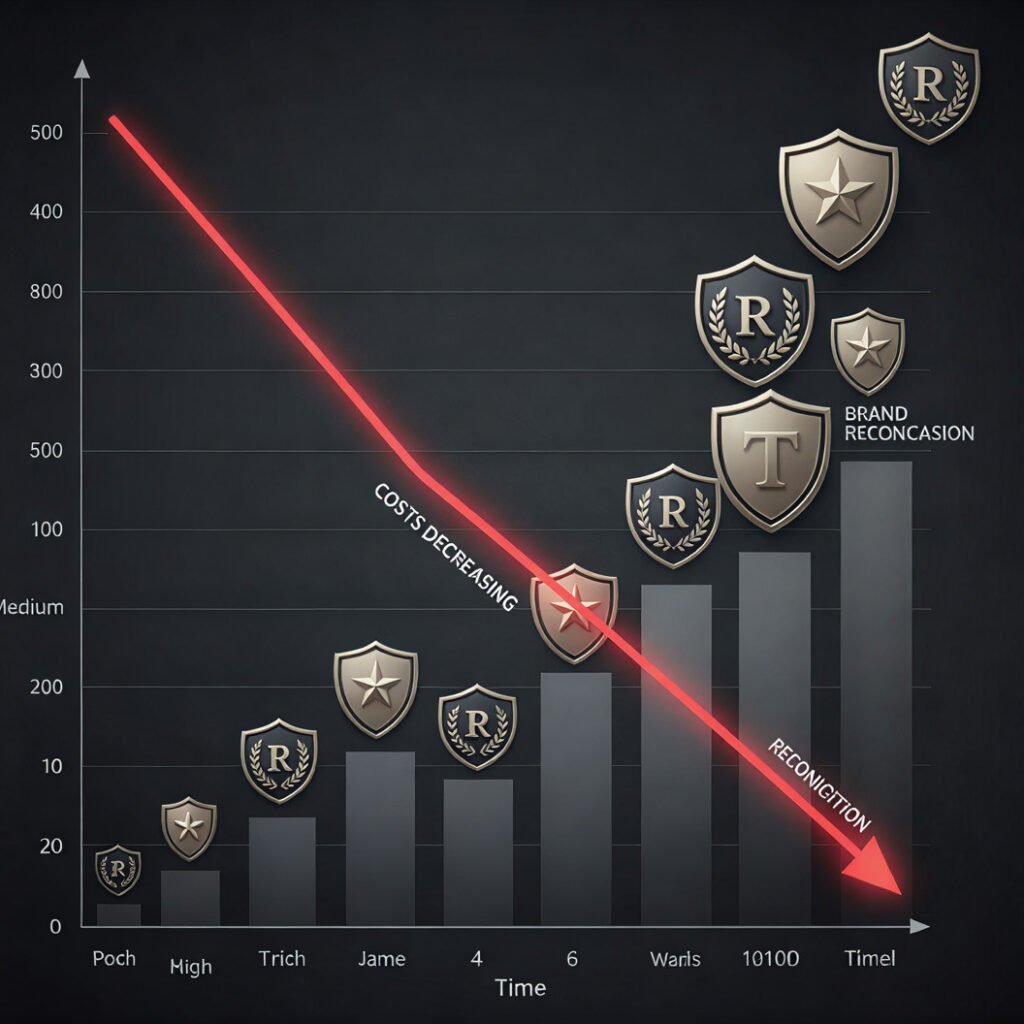
Lower Customer Acquisition Costs (CAC)
In ecommerce, paid acquisition is expensive and becoming more competitive every year. Brands with strong reputations consistently see lower CAC because:
- Ads convert at higher rates due to trust
- Retargeting audiences warm up faster
- Influencer content performs better
- Referral traffic increases naturally
- Brand search volume grows
For example, when two ecommerce brands sell similar products at similar prices, the brand with stronger reputation often sees 20–40% lower acquisition costs simply because users already trust it. Over time, the benefits of brand reputation reduce dependency on paid traffic and stabilize acquisition economics.
Reduced Sales Friction in High-Ticket Ecommerce
For ecommerce stores selling high-ticket products—such as furniture, electronics, luxury goods, or B2B ecommerce—reputation significantly shortens the decision cycle.
Customers trust:
- Product descriptions
- Warranty promises
- Delivery timelines
- Installation or onboarding support
This reduces pre-sale emails, chat inquiries, and cart abandonment caused by uncertainty. The benefits of brand reputation here include faster conversions and lower support overhead.
Fewer Discounts Needed to Drive Conversions
Discount dependency is a silent margin killer in ecommerce. Brands with weak reputations rely on:
- Constant coupon codes
- Flash sales
- Price matching
Strong brands do not need to discount aggressively. Customers are willing to pay full price because they trust outcomes. One of the most profitable benefits of brand reputation is margin protection without sacrificing volume.
Lower Customer Support, Refund, and Chargeback Costs
Customers behave differently toward brands they trust. Reputable ecommerce brands experience:
- Fewer chargebacks
- Lower refund abuse
- More patience during delays
- Higher willingness to accept resolutions
This reduces support staffing costs and operational stress. Over time, reputation-driven goodwill becomes a cost-control mechanism.
Reduced Operational Firefighting
Strong reputation smooths operations. When customers trust the brand, minor issues do not escalate into public complaints or disputes. Teams spend less time firefighting and more time improving the business.
2. Impact of Brand Reputation on Hiring, Retention, and Internal ROI for Ecommerce Teams
For ecommerce businesses, people are leverage. Performance marketers, supply-chain managers, CRO specialists, designers, customer support leads, marketplace managers, and engineers directly influence revenue and margins. One of the most underestimated benefits of brand reputation is how deeply it affects hiring efficiency, employee performance, and long-term internal ROI.

Why Brand Reputation Matters More for Ecommerce Hiring
Ecommerce talent is highly mobile and in constant demand. Skilled professionals often receive multiple offers at the same time. In this environment, brand reputation becomes a decision shortcut.
Candidates evaluate ecommerce brands on:
- Market credibility
- Customer sentiment
- Product quality perception
- Growth trajectory
- Ethical behavior (returns, refunds, sustainability, data privacy)
A strong reputation reduces perceived career risk. Candidates believe the brand will survive, grow, and add value to their resume. This is one of the most practical benefits of brand reputation for ecommerce hiring.
Lower Hiring Costs Across Ecommerce Roles
Reputable ecommerce brands consistently experience:
- Higher inbound job applications
- Lower dependency on recruitment agencies
- Reduced cost-per-hire
- Shorter hiring cycles
For example, a well-known D2C brand often fills performance marketing or operations roles through inbound LinkedIn applications alone, while lesser-known stores must pay recruiter fees or offer inflated salaries. Over time, the benefits of brand reputation reduce total hiring spend.
Higher Offer Acceptance Rates
When two ecommerce employers offer similar compensation, candidates usually choose the brand with stronger reputation. Acceptance rates increase because:
- The brand feels more stable
- The experience carries higher career signaling value
- Friends and peers recognize the brand name
This reduces renegotiations, drop-offs, and repeated hiring cycles—saving both time and money.
Ability to Hire Better Talent at the Same Salary
One of the most powerful benefits of brand reputation is its ability to act as non-monetary compensation. High-quality ecommerce professionals often accept slightly lower pay in exchange for:
- Resume credibility
- Learning opportunities
- Exposure to scale and complexity
- Pride in association
This allows ecommerce businesses to upgrade talent quality without proportionally increasing payroll costs.
Faster Team Formation During Growth Phases
During peak growth periods—such as post-funding expansion, seasonal scaling, or international launches—reputation accelerates team building. Candidates join faster, onboarding friction is lower, and teams reach productivity sooner.
Speed matters in ecommerce. The benefits of brand reputation here show up as faster execution and reduced opportunity cost.
Reduced Employee Churn in Ecommerce Operations
Retention is a major cost center in ecommerce, especially in roles like customer support, operations, and fulfillment coordination.
Strong brand reputation reduces churn because employees:
- Feel proud representing the brand
- Receive positive feedback from customers
- Experience less hostility in support interactions
- Believe in long-term brand success
Lower churn means lower retraining costs, preserved institutional knowledge, and more consistent execution.
Higher Employee Productivity and Accountability
Employees working for reputable ecommerce brands tend to hold themselves to higher standards. They are more careful with customer communication, quality control, and process compliance because they do not want to damage the brand’s image.
This creates a self-reinforcing performance culture. One of the hidden benefits of brand reputation is improved operational discipline without micromanagement.
Customer Support Teams and Emotional Load
Customer support is often the frontline of brand perception. When an ecommerce brand has a strong reputation:
- Customers approach support with patience
- Conversations are less confrontational
- Escalations are less frequent
This reduces emotional burnout and improves retention in support teams—a major internal ROI lever.
Employees as Brand Advocates and Growth Assets
Employees of reputable ecommerce brands naturally become advocates. They:
- Share brand content
- Recommend the store to peers
- Defend the brand in public discussions
This advocacy strengthens external reputation and feeds back into easier hiring and customer trust. The benefits of brand reputation thus compound internally and externally.
Internal ROI: Measuring the People Impact of Brand Reputation
Ecommerce businesses can measure internal ROI from reputation by tracking:
- Cost-per-hire trends
- Offer acceptance rates
- Employee retention rates
- Time-to-productivity
- Support ticket sentiment
When these metrics improve alongside brand reputation, the financial impact becomes undeniable.
3. Brand Reputation as a Crisis Buffer in Ecommerce (Scandals, Delays, Recalls)
In ecommerce, crises are not a matter of if—they are a matter of when. Supply chains break, couriers delay shipments, products fail quality checks, influencers create backlash, marketplaces suspend listings, data leaks occur, and negative reviews spread faster than facts. One of the most underrated benefits of brand reputation is its role as a crisis buffer that absorbs shock when things go wrong.

For ecommerce businesses, brand reputation determines whether a crisis becomes a temporary disruption or an existential threat.
Why Ecommerce Is More Vulnerable to Crises Than Offline Retail
Ecommerce brands operate in a high-visibility, low-patience environment:
- Customers cannot see operations behind the scenes
- Social proof is public and permanent
- Marketplaces amplify negative signals instantly
- Algorithms react before humans do
Because of this, trust erosion happens faster online. The benefits of brand reputation are magnified during crises because reputation controls how quickly trust collapses—or stabilizes.
Reputation Credit: The Invisible Insurance Policy
Strong ecommerce brands accumulate what can be called reputation credit. This is the goodwill built through consistent delivery, honest communication, fair returns, and reliable customer experience.
When a crisis occurs:
- Customers assume good intent
- Complaints are framed as exceptions, not patterns
- Buyers wait for clarification instead of demanding refunds
This reputation credit acts like insurance. Brands without it face immediate hostility.
Shipping Delays and Fulfillment Breakdowns
Shipping delays are one of the most common ecommerce crises. During peak seasons or logistics disruptions, delays are inevitable.
Brands with strong reputation experience:
- Fewer angry tickets
- Lower refund demands
- Higher willingness to wait
Customers often say, “They usually deliver on time, so I’ll wait.” That sentence represents the benefits of brand reputation in real economic terms.
Weak brands, however, see:
- Chargebacks
- Marketplace penalties
- Review bombing
- Social media escalation
Product Quality Issues and Recalls
Product defects are especially dangerous in ecommerce because:
- Customers discover issues privately
- Complaints surface publicly later
- Negative reviews persist indefinitely
Reputable ecommerce brands handle recalls differently:
- Customers respond to proactive communication
- Refunds are processed without suspicion
- Public perception focuses on responsibility, not negligence
Brands without reputation are assumed to be careless or deceptive.
How Loyal Customers Defend Ecommerce Brands Online
One of the most powerful benefits of brand reputation is organic customer defense.
During crises, loyal customers:
- Respond to negative reviews with context
- Share positive experiences publicly
- Push back against misinformation
This peer-to-peer defense is more trusted than brand statements. It often stabilizes sentiment before official responses gain traction.
Marketplace-Specific Crisis Protection
On platforms like Amazon, Flipkart, Etsy, or Meesho, reputation directly affects algorithmic treatment.
Strong brands benefit from:
- Better review velocity recovery
- Faster reinstatement after suspensions
- Lower risk of account termination
Marketplaces trust brands with history. The benefits of brand reputation here include platform-level forgiveness.
Influencer and PR Backlash Scenarios
Ecommerce brands increasingly rely on influencers and creators. When controversies arise:
- Strong brands distance themselves credibly
- Audiences give benefit of the doubt
- Damage remains localized
Weak brands are dragged into prolonged backlash cycles.
Reduced Long-Term Revenue Damage
The true cost of a crisis is not the immediate revenue dip—it is long-term trust erosion.
Brands with strong reputation:
- Recover conversion rates faster
- Retain repeat customers
- Stabilize lifetime value
Brands without reputation see permanent declines.
Crisis Communication Efficiency
Reputable brands communicate less but more effectively during crises. Customers trust statements, timelines, and explanations.
This reduces:
- Support overload
- Escalation loops
- Social media firefighting
Measuring the Crisis-Buffer Effect of Brand Reputation
Ecommerce businesses can quantify crisis buffering by tracking:
- Refund rates during incidents
- Review score recovery time
- Post-crisis repeat purchase rates
- Support ticket sentiment
When these metrics remain stable during disruptions, the benefits of brand reputation become measurable and defensible.
Why Some Ecommerce Brands Survive and Others Collapse
The difference is rarely the severity of the crisis. It is the depth of trust built beforehand.
Brand reputation determines whether customers say:
- “They made a mistake”
- or “This confirms what I suspected”
That distinction defines survival.
4. Pricing Power, Average Order Value (AOV), and Subscription Resilience in Ecommerce
Pricing is where brand reputation turns directly into profit. While many ecommerce brands compete on discounts and promotions, strong brands rely on trust, perceived safety, and consistency to command higher prices. One of the most financially meaningful benefits of brand reputation is sustained pricing power without sacrificing volume.

Why Pricing Power Matters More Than Traffic
Traffic growth can be bought. Pricing power must be earned.
A 5–10% increase in average order value or price realization often generates more profit than a 30–40% increase in traffic. The benefits of brand reputation show up here with exceptional leverage, especially in ecommerce businesses operating on thin margins.
Psychological Price Tolerance in Online Shopping
Ecommerce buyers are not purely rational. They price-shop only when they feel uncertain.
Strong brand reputation reduces perceived risk, which increases psychological price tolerance. Customers are willing to pay more when they believe:
- The product will match expectations
- Delivery will be reliable
- Returns will be honored
- Support will resolve issues
This explains why reputable ecommerce brands consistently sell at higher price points even when alternatives are cheaper.
Reduced Price Sensitivity and Comparison Behavior
When brand reputation is weak, customers open multiple tabs, compare prices obsessively, and delay decisions.
When brand reputation is strong:
- Comparison behavior decreases
- Decision time shortens
- Discount dependency falls
One of the hidden benefits of brand reputation is fewer abandoned carts caused by “I’ll think about it” behavior.
Brand Reputation and Average Order Value (AOV)
Strong reputation increases AOV in multiple ways:
- Customers trust upsells and bundles
- Add-ons feel safer
- Premium variants convert better
For example, customers are more likely to choose extended warranties, higher-tier bundles, or multi-pack offers from brands they trust. Over time, the benefits of brand reputation show up as consistent AOV growth without aggressive tactics.
Bundling and Cross-Selling Economics
Reputable ecommerce brands succeed with bundles because customers assume compatibility and quality.
Bundles reduce friction around:
- Product fit
- Return complexity
- Value justification
This improves cart value and reduces per-unit fulfillment costs.
Subscription Pricing and Renewal Resilience
Subscription ecommerce models—such as consumables, beauty, supplements, pet products, and software-linked commerce—are especially sensitive to trust.
The benefits of brand reputation in subscriptions include:
- Higher trial-to-paid conversion
- Stronger renewal rates
- Lower churn during price increases
Customers tolerate price adjustments when they trust the brand’s intent and consistency.
Surviving Price Increases Without Revenue Collapse
Inflation, logistics costs, and supplier price hikes force ecommerce brands to raise prices.
Brands with strong reputation:
- Communicate increases transparently
- Retain customer trust
- Avoid mass churn
Brands without reputation often experience sudden demand drops. Pricing resilience is one of the clearest benefits of brand reputation.
Premium Positioning vs Discount Dependency
Discount-driven ecommerce brands train customers to wait.
Reputation-driven brands train customers to trust.
This distinction determines long-term profitability. Strong reputation allows:
- Fewer sitewide sales
- Better full-price sell-through
- Predictable margins
Measuring Pricing Power and Reputation Impact
Ecommerce brands can quantify pricing benefits by tracking:
- AOV trends
- Discount utilization rates
- Conversion rates during non-sale periods
- Subscription churn after price changes
When these metrics remain stable or improve alongside price increases, the benefits of brand reputation are doing the heavy lifting.
Long-Term Margin Expansion
Over time, pricing power compounds. As reputation strengthens:
- Customers anchor higher prices as normal
- Promotions become optional
- Margins expand sustainably
Few growth levers are as defensible or as profitable as reputation-driven pricing.
5. Brand Reputation as an Ecommerce Distribution Channel
Most ecommerce brands think of distribution as something they must continuously buy: paid ads, influencer fees, affiliate commissions, marketplace ads, or SEO investments that take months to mature. What almost no founders realize early enough is that brand reputation itself becomes a standalone distribution channel—one that compounds over time, lowers marginal acquisition cost, and unlocks reach that money alone cannot buy.
When reputation is strong, distribution stops being purely outbound. The market begins pulling the brand into conversations, platforms, and recommendation loops without constant spending.
Reputation Turns Trust into Reach
In ecommerce ecosystems, trust travels faster than ads. Brands with strong reputations appear repeatedly in places they never directly paid for:
- Influencer shortlists before outreach even begins
- Agency and consultant recommendations
- Marketplace internal reviews and risk assessments
- Community threads asking “Which brand should I trust?”
- Private founder groups and Slack communities
This is not awareness—it is pre-qualified distribution. The benefits of brand reputation here are not impressions or clicks, but default inclusion.
Once a brand becomes the “safe answer,” it enters distribution channels automatically.
Easier Influencer and Affiliate Partnerships (Inbound, Not Chased)
Creators and affiliates are risk managers. Every promotion signals endorsement to their audience. As a result, they actively avoid ecommerce brands that:
- Have inconsistent reviews
- Handle refunds poorly
- Ship unreliably
- Create customer backlash
A strong reputation flips the dynamic. Instead of negotiating endlessly, reputable ecommerce brands experience:
- Inbound collaboration requests
- Lower commission expectations
- Higher-quality creators willing to test deeply
- Longer-term partnerships instead of one-off posts
This changes the economics of influencer marketing. The brand no longer pays to overcome skepticism—it is chosen because it reduces reputational risk for the creator. One of the most underestimated benefits of brand reputation is turning influencer outreach into influencer selection.
Marketplace Access, Speed, and Algorithmic Trust
Marketplaces do not treat all sellers equally. Behind the scenes, platforms like Amazon, Flipkart, Etsy, and Shopify ecosystems assign internal trust levels based on historical brand behavior.
Strong reputation results in:
- Faster seller onboarding
- Smoother listing approvals
- Lower suspension probability
- Quicker reinstatements when issues occur
This matters because marketplace distribution is often binary: either you are visible and scaling, or you are throttled and buried.
Reputable brands move faster because platforms trust them to protect customer experience. While competitors struggle with compliance reviews and account risk, strong brands expand categories, launch SKUs, and scale ads with fewer friction points.
Recommendation Velocity as a Distribution Multiplier
Some of the highest-converting ecommerce traffic never comes from ads—it comes from recommendation.
Agencies, CRO consultants, logistics partners, SaaS vendors, and creators routinely recommend brands they trust when advising clients or peers. These recommendations occur in:
- Strategy calls
- Internal playbooks
- Comparison articles
- “Best brands” lists
- Community responses
Strong reputation increases recommendation velocity because suggesting the brand carries little reputational downside for the recommender.
This creates a steady flow of referral traffic that:
- Converts at significantly higher rates
- Has near-zero acquisition cost
- Requires no bidding or optimization
The benefits of brand reputation here compound quietly. The brand becomes the answer people give when asked, “Who should I use?”
Earned Media and Backlinks as Distribution Infrastructure
Journalists and content creators prefer brands that are credible, consistent, and safe to cite. Ecommerce brands with strong reputation naturally earn:
- Product roundups
- Editorial mentions
- Founder interviews
- Case studies
- High-quality backlinks
These mentions strengthen SEO authority, increase brand search volume, and reinforce trust loops across search engines and AI systems.
Unlike paid PR campaigns, reputation-driven media coverage does not decay quickly. It accumulates, strengthens domain authority, and continues sending traffic long after publication.
Distribution Compounds Non-Linearly
The most powerful characteristic of reputation-based distribution is that it does not scale linearly.
Each positive interaction increases:
- Partner willingness
- Platform confidence
- Algorithmic favorability
- Referral frequency
As reputation strengthens, distribution becomes:
- Easier to access
- Cheaper to maintain
- Faster to activate
Paid distribution spikes and resets. Reputation-based distribution layers.
Founder Insight: Distribution You Don’t Have to Rent Forever
Ecommerce brands that rely only on rented channels are exposed to rising costs, policy shifts, and competitive bidding wars. Brands that invest in reputation create embedded distribution inside the ecosystem itself.
The strategic payoff is clear:
When brand reputation becomes a distribution channel, growth is no longer limited by ad budgets—it is powered by trust already earned.
6. SEO, AI Search & Marketplace Algorithm Trust (2026-Focused)
Search visibility in ecommerce is no longer driven purely by keywords, backlinks, or technical optimization. By 2026, search engines, AI assistants, and marketplace algorithms increasingly act as risk filters. Their primary goal is not just relevance, but reliability. This is where the benefits of brand reputation become a decisive ranking and distribution advantage.
Why SEO Is Now Reputation-Weighted
Traditional SEO assumed that if a page was relevant and authoritative, it deserved to rank. Modern search systems go further. They ask a deeper question: Is this brand safe to recommend to users?
For ecommerce queries, the risk of a bad recommendation is high. A poor brand experience reflects negatively on the search engine or platform itself. As a result, algorithms now incorporate reputation signals that go beyond page-level optimization.
The benefits of brand reputation in SEO appear as algorithmic trust. Trusted ecommerce brands are:
- More resilient to core updates
- Faster to recover from ranking volatility
- More likely to rank with fewer backlinks
This is why some ecommerce sites survive updates that wipe out competitors with similar content.
Brand Searches as a Primary SEO Signal
One of the strongest modern SEO signals is branded search demand. When users search specifically for a brand name, it signals:
- Real-world demand
- Prior trust
- Repeat intent
Search engines interpret rising branded queries as evidence that users value the brand. Ecommerce stores with strong reputation naturally generate more brand searches, which stabilizes rankings across non-branded keywords as well.
The benefits of brand reputation here are indirect but powerful. You rank better not because you optimized harder, but because users actively seek you out.
Click-Through Rate (CTR) as a Trust Signal
When multiple ecommerce listings appear for similar products, users consistently click the brand they recognize and trust.
Higher CTR sends feedback signals to search engines that:
- Users prefer this result
- The brand matches search intent
- The result satisfies expectations
Over time, this creates a ranking reinforcement loop. Reputable ecommerce brands earn better positions simply because users choose them more often. This is one of the most underappreciated benefits of brand reputation in SEO.
E-E-A-T and Ecommerce Trust Layers
Google’s E-E-A-T framework (Experience, Expertise, Authority, Trust) has become deeply integrated into ecommerce rankings, especially for categories involving money, health, safety, or personal data.
Brand reputation strengthens every layer:
- Experience: Consistent delivery, real reviews, long-term presence
- Expertise: Clear product knowledge, accurate descriptions, support competence
- Authority: Mentions, citations, media coverage, partnerships
- Trust: Refund behavior, complaint handling, transparency
Ecommerce brands that demonstrate these qualities across the web—not just on their own site—are rewarded with more stable organic visibility.
Natural Backlinks and Brand Mentions
Strong reputation changes how backlinks are earned. Instead of chasing links, reputable ecommerce brands attract them naturally through:
- Reviews
- Comparison articles
- Media features
- Influencer mentions
- Customer-generated content
Search engines increasingly treat unlinked brand mentions as implied authority signals. The benefits of brand reputation include link equity that accumulates passively over time.
AI-Generated Search Results and Answer Engines
By 2026, a growing share of ecommerce discovery happens inside AI-generated answers rather than traditional SERPs.
When users ask AI tools questions like:
- “Which online store is reliable for electronics?”
- “Which brand delivers consistently?”
- “Which ecommerce site has easy returns?”
AI systems aggregate reputation signals across reviews, forums, complaints, and historical sentiment. Brands with weak reputations may be excluded entirely, regardless of SEO spend.
This creates a new category of benefits of brand reputation: inclusion. Trusted brands are mentioned. Untrusted brands are invisible.
Marketplace Algorithms and Seller Trust
Marketplaces operate on trust economics. Their algorithms prioritize sellers who reduce platform risk.
Strong brand reputation improves:
- Product ranking
- Buy Box eligibility
- Ad efficiency
- Account stability
Reputable sellers experience fewer sudden suppressions and faster issue resolution. Marketplaces favor brands that protect customer experience because it protects the platform’s reputation.
Review Velocity, Consistency, and Algorithmic Confidence
Algorithms do not just look at average ratings. They analyze:
- Review velocity
- Sentiment consistency
- Issue resolution patterns
A brand with thousands of mixed reviews but strong recovery patterns often outranks brands with fewer but unstable signals. The benefits of brand reputation here include algorithmic forgiveness during temporary disruptions.
Defense Against SEO and Platform Volatility
Ecommerce brands without reputation rely on fragile tactics. A single update or policy change can destroy visibility.
Brands with strong reputation enjoy:
- Ranking stability
- Faster recovery
- Reduced dependence on hacks
This defensive value is one of the most strategic benefits of brand reputation in a volatile algorithmic environment.
7. Conversion Rates Across the Ecommerce Funnel (Metrics + Examples)
Traffic does not create revenue—conversions do. One of the most measurable and underestimated benefits of brand reputation is its direct impact on conversion rates at every stage of the ecommerce funnel. While many brands obsess over traffic growth, reputation quietly determines how efficiently that traffic turns into revenue.
This section breaks down the ecommerce funnel stage by stage and shows exactly how brand reputation improves performance, supported by metrics and real-world examples.
Top of Funnel: Ad Clicks, Organic Clicks, and First Impressions
At the top of the funnel, brand reputation influences whether users click at all.
Metrics affected:
- Ad click-through rate (CTR)
- Organic CTR in search results
- Marketplace listing CTR
When users see ads or search results from a brand they recognize and trust, they click more often—even if the offer is similar.
Example: Two ecommerce brands run identical Google Shopping ads. The brand with stronger reputation sees a 20–35% higher CTR because users recognize the name and assume reliability. This immediately lowers cost per click and improves ROAS.
The benefits of brand reputation begin before users land on your site.
Product Listing & Landing Page Conversion Rates
Once users land on a product or category page, reputation reduces doubt.
Metrics affected:
- Add-to-cart rate
- Scroll depth
- Time on page
- Bounce rate
Trusted ecommerce brands see higher engagement because users assume the product description, images, and reviews are honest. They do not aggressively fact-check every claim.
Example: A DTC skincare brand with strong reputation sees higher add-to-cart rates even with fewer reviews than competitors. Customers trust the brand story and ingredient transparency, reducing hesitation.
One of the clearest benefits of brand reputation is fewer micro-frictions that normally kill conversions.
Mid-Funnel: Add-to-Cart → Checkout Progression
Many ecommerce brands lose customers between add-to-cart and checkout.
Metrics affected:
- Cart abandonment rate
- Checkout initiation rate
- Coupon usage dependency
Weak reputation increases fear around:
- Payment safety
- Delivery reliability
- Return difficulty
Strong reputation reassures buyers subconsciously.
Example: A furniture ecommerce brand with strong reputation sees lower cart abandonment for high-ticket items because customers trust delivery timelines and post-purchase support.
The benefits of brand reputation here show up as smoother funnel flow without aggressive incentives.
Checkout Completion & Payment Confidence
Checkout is where trust matters most.
Metrics affected:
- Checkout completion rate
- Payment failure abandonment
- Chargeback frequency
When brand reputation is strong, customers worry less about:
- Entering card details
- Refund eligibility
- Post-payment communication
Example: Reputable ecommerce brands often see 10–20% higher checkout completion rates compared to unknown stores with similar UX.
This improvement alone can outperform most CRO experiments.
Post-Purchase Conversion: Repeat Purchases & LTV
The funnel does not end at checkout.
Metrics affected:
- Repeat purchase rate
- Customer lifetime value (LTV)
- Email and SMS conversion rates
Customers who trust a brand are more likely to reorder without incentives. The benefits of brand reputation here compound over time.
Example: A consumables ecommerce brand with strong reputation converts first-time buyers into subscribers more easily because customers trust consistency and quality.
Subscription Funnel Conversion Rates
For subscription ecommerce models, reputation is everything.
Metrics affected:
- Trial-to-paid conversion
- Renewal rate
- Churn rate
Strong reputation reduces perceived long-term risk.
Example: Subscription brands with strong reputation often survive price increases with minimal churn because customers trust ongoing value.
Email, SMS, and Retargeting Funnel Performance
Lifecycle marketing relies heavily on trust.
Metrics affected:
- Open rates
- Click-through rates
- Conversion rates from campaigns
Reputable brands see higher engagement because messages feel helpful rather than promotional.
Example: A trusted ecommerce brand announcing a restock converts better than a lesser-known brand running discounts.
Marketplace Funnel Conversions
On marketplaces, reputation directly affects conversion.
Metrics affected:
- Listing conversion rate
- Buy Box win rate
- Review-to-sale ratio
Customers default to sellers with proven reputation, even at higher prices. The benefits of brand reputation here include algorithmic and human preference.
How to Measure Funnel Impact of Brand Reputation
Ecommerce brands can isolate reputation impact by tracking:
- Conversion rate changes during non-sale periods
- Performance of branded vs non-branded traffic
- Conversion stability during operational issues
- Funnel performance before and after reputation improvements
When conversion rates improve without major UX changes, reputation is usually the hidden driver.
Why Reputation Beats Most CRO Tactics
UX tweaks optimize mechanics. Reputation optimizes belief.
Belief-driven conversion improvements are:
- More durable
- Harder to copy
- Less dependent on constant testing
This is why the benefits of brand reputation often outperform traditional CRO tactics in long-term ecommerce growth.
8. Long-Term Valuation & Exit Value for Ecommerce Founders
For ecommerce founders, growth metrics like traffic, revenue, and followers are visible and exciting—but they are not what ultimately determines exit outcomes. Acquirers, private equity firms, and strategic buyers care about risk-adjusted future cash flows. One of the most powerful yet undervalued benefits of brand reputation is how dramatically it improves long-term valuation and exit multiples.
Brand reputation converts short-term performance into long-term confidence. It reassures buyers that revenue will persist even when ads pause, algorithms change, founders step back, or competitors enter the market.
How Acquirers Actually Value Ecommerce Brands
Ecommerce valuations are not based only on current profit. Buyers evaluate:
- Revenue stability
- Customer loyalty and repeat rate
- Dependency on paid traffic
- Refund, return, and chargeback patterns
- Brand defensibility
- Platform risk (Amazon, Meta, Google)
Brand reputation directly influences every one of these factors. This is why two ecommerce businesses with identical revenue can receive wildly different valuations.
Revenue Quality vs Revenue Quantity
Founders often focus on growing top-line numbers. Acquirers focus on revenue quality.
Revenue backed by strong brand reputation is perceived as:
- More predictable
- Less sensitive to ad costs
- Less vulnerable to competitors
- More resilient during downturns
The benefits of brand reputation here translate into higher confidence in future earnings, which pushes valuation multiples upward.
Higher Multiples for Reputation-Driven Ecommerce Brands
In acquisition markets, ecommerce brands with strong reputations routinely command:
- Higher EBITDA multiples
- Revenue-based premiums
- Faster deal closures
Why? Because buyers believe customers will stay even after ownership changes. Reputation reduces “founder dependency,” a major valuation risk.
Reduced Due Diligence Friction
Due diligence is where many ecommerce deals stall or collapse.
Strong brand reputation simplifies due diligence by:
- Lowering customer complaint red flags
- Reducing refund and dispute scrutiny
- Showing consistent review sentiment
- Demonstrating ethical operations
Buyers spend less time investigating hidden risks when reputation signals are clean. One of the subtle benefits of brand reputation is faster, smoother deal execution.
Platform Risk and Account Stability
For marketplace-heavy ecommerce brands, platform risk is a major valuation concern.
Brands with strong reputation show:
- Stable seller ratings
- Low policy violation history
- Faster reinstatement if issues occur
This reduces the perceived risk of sudden account suspensions post-acquisition. Buyers pay more for stability.
Brand Reputation as a Transferable Asset
One of the biggest fears in ecommerce acquisitions is whether performance will survive after the founder exits.
Strong brand reputation reassures buyers that:
- Customers buy because of the brand, not the founder
- Trust is institutional, not personal
- The business can scale under new management
This dramatically increases exit attractiveness.
Impact on Strategic Buyers vs Financial Buyers
Strategic buyers value brand reputation because it:
- Strengthens their portfolio
- Opens cross-selling opportunities
- Enhances corporate credibility
Private equity buyers value reputation because it:
- Stabilizes cash flows
- Reduces operational risk
- Improves leverage potential
In both cases, the benefits of brand reputation increase competitive bidding and final exit price.
Reputation and International Expansion Valuation
Brands with strong reputation expand internationally faster.
For acquirers, this signals:
- Market transferability
- Lower localization risk
- Faster growth potential
This optionality is often priced into the deal as future upside.
Brand Reputation During Earn-Out Periods
Many ecommerce exits include earn-outs tied to performance.
Strong reputation:
- Stabilizes post-acquisition sales
- Reduces customer churn during transitions
- Protects earn-out payouts for founders
This makes reputation a personal financial hedge.
Case Pattern: Why Some Ecommerce Brands Exit Successfully
Successful exits often share common traits:
- Strong repeat customer base
- Low discount dependency
- Clean review profiles
- Consistent brand voice
These are all outputs of long-term reputation building. The benefits of brand reputation surface clearly at exit—sometimes more clearly than during operations.
Founder Takeaway: Build for Buyers, Not Just Customers
Ecommerce founders who plan early for reputation gain:
- More exit options
- Better negotiating power
- Higher certainty of closing
Brand reputation is not a branding exercise. It is an exit strategy.
9. Brand Reputation as a Compounding Ecommerce Asset
In ecommerce, very few investments compound.
Advertising delivers returns only while you pay. Influencers lose relevance. Marketplaces change ranking logic. Products get copied. But brand reputation—when built consistently—behaves like capital. It compounds quietly, predictably, and powerfully over time.
This is one of the most strategic and underappreciated benefits of brand reputation for ecommerce founders.
Reputation Compounds Like Capital
Financial capital compounds through interest. Reputation compounds through experience.
Every successful delivery, fair refund, honest delay email, and consistent product quality adds a small layer of trust. Individually, these moments seem insignificant. Collectively, they create exponential impact.
Unlike paid growth, reputation:
- Does not reset when spending stops
- Improves performance of future efforts
- Reduces resistance to growth over time
The benefits of brand reputation accelerate as history accumulates. A five-year-old trusted ecommerce brand converts faster than a new brand—even with inferior ads or UX.
First-Mover Trust Advantage in Ecommerce Categories
In most ecommerce niches, the first brand to earn trust defines the category standard.
Customers unconsciously benchmark competitors against:
- The first brand they purchased from
- The brand they associate with reliability
- The name they recognize during uncertainty
Early reputation leaders benefit from default trust. Even when competitors enter with better pricing or aggressive marketing, customers hesitate to switch because trust already exists.
This first-mover trust advantage compounds because:
- Reviews accumulate earlier
- Word-of-mouth starts sooner
- Brand searches grow organically
Late entrants must spend disproportionately more just to close the trust gap.
Early Reputation Leaders Set Category Expectations
Reputation leaders don’t just sell products—they define what “good” looks like.
They set expectations around:
- Delivery timelines
- Packaging quality
- Customer support responsiveness
- Return and refund policies
Once expectations are set, competitors are judged against them. This gives established brands structural advantage without additional effort.
One of the long-term benefits of brand reputation is shaping customer psychology—not reacting to it.
Difficulty of Replication: Why Trust Can’t Be Copied
Competitors can replicate:
- Product features
- Website layouts
- Pricing strategies
- Ad creatives
They cannot replicate:
- Years of consistent customer experiences
- Emotional memory tied to past purchases
- Public review history across platforms
- Brand behavior during crises
Trust is time-bound. It requires repetition and consistency across thousands of micro-interactions. This makes reputation one of the hardest ecommerce assets to clone.
Reputation as a Time-Based Competitive Advantage
Reputation creates a time moat.
New competitors are not just competing on execution—they are competing against your history. No amount of funding can buy years of proven reliability overnight.
This time-based advantage protects established ecommerce brands from:
- Aggressive price undercutting
- Feature parity
- Short-term marketing spikes by competitors
The benefits of brand reputation increase as the category becomes more crowded.
Protection Against Commoditization
As ecommerce categories mature, products become interchangeable.
When commoditization hits:
- Price becomes the primary lever
- Margins shrink
- Customer loyalty weakens
Strong brand reputation breaks this cycle. Customers stop comparing purely on price and start choosing based on perceived safety, familiarity, and reliability.
Reputation shifts competition from who is cheapest to who feels safest to buy from.
Defense Against Price Wars
In price wars, untrusted brands bleed first.
Trusted brands:
- Maintain margins longer
- Avoid race-to-the-bottom pricing
- Retain customers even when prices rise
One of the most practical benefits of brand reputation is pricing insulation during competitive pressure.
Reputation as a Self-Reinforcing Loop
Strong reputation creates positive feedback loops:
- Better reviews improve conversion
- Higher conversion improves platform ranking
- Better ranking drives more sales
- More sales generate more reviews
This loop strengthens automatically once reputation reaches critical mass.
Long-Term Brand Stability During Market Shocks
During:
- Economic slowdowns
- Platform algorithm updates
- Logistics disruptions
Customers consolidate spending toward brands they trust. This flight to safety disproportionately benefits reputation-rich ecommerce businesses.
Reputation doesn’t eliminate risk—but it absorbs shock.
Founder Perspective: Reputation Is an Asset, Not an Outcome
Many founders treat reputation as a side effect of growth.
High-performing ecommerce founders treat reputation as:
- A balance-sheet asset
- A competitive moat
- A long-term growth engine
They invest in reputation even when it doesn’t show immediate ROI—because they understand the compounding curve.
Strategic Takeaway
Revenue can spike. Traffic can disappear. Platforms can change.
But brand reputation compounds.
The ecommerce brands that dominate categories over decades are not the loudest or the cheapest—they are the most trusted.
That is the ultimate, long-term benefit of brand reputation.
Actionable Ecommerce Takeaways
- Treat brand reputation as an operating asset
- Measure its impact on CAC, AOV, and retention
- Invest consistently, not reactively
- Align operations with brand promises
- Optimize for long-term trust
Final Thoughts: Reputation Is the Real Competitive Advantage
Trends change. Platforms evolve. Algorithms update. But trust remains timeless.
The benefits of brand reputation go beyond sales metrics. They shape how your business is remembered, recommended, and respected.
In a crowded market, products can be copied, prices can be matched, and features can be replicated.
Reputation cannot be cloned.
Brands that understand this early don’t just grow — they endure.
Frequently Asked Questions About the Benefits of Brand Reputation
What are the main benefits of brand reputation for ecommerce businesses?
The main benefits of brand reputation for ecommerce businesses include lower customer acquisition costs, higher conversion rates, stronger pricing power, reduced return and refund rates, easier marketplace approvals, better SEO performance, higher average order value, improved customer lifetime value, and greater resilience during crises or market downturns. Over time, brand reputation also increases business valuation and exit potential.
How does brand reputation affect ecommerce sales?
Brand reputation directly affects ecommerce sales by reducing hesitation at checkout. When customers recognize and trust a brand, they are more likely to complete purchases, buy higher-priced items, and return for repeat orders. Strong reputation improves conversion rates across the funnel—from landing pages to checkout—leading to higher overall revenue without proportional increases in ad spend.
Can brand reputation reduce advertising costs in ecommerce?
Yes. One of the most measurable benefits of brand reputation is reduced advertising costs. Trusted ecommerce brands typically see lower cost per click (CPC), higher click-through rates (CTR), and better conversion efficiency. Over time, this lowers customer acquisition cost (CAC) and reduces dependence on aggressive discounting or constant paid campaigns.
Why is brand reputation important for ecommerce marketplaces like Amazon or Other?
Marketplaces prioritize customer experience and risk management. Ecommerce brands with strong reputations face fewer account suspensions, faster listing approvals, and better internal trust signals. Positive reviews, low complaint rates, and consistent fulfillment improve visibility and ranking within marketplace algorithms.
How does brand reputation impact pricing power in ecommerce?
Brand reputation increases psychological price tolerance. Customers are more willing to pay higher prices when they trust a brand to deliver quality, reliability, and post-purchase support. This allows ecommerce businesses to maintain healthier margins, reduce discount dependency, and protect profitability during price competition.
Does brand reputation influence repeat purchases and customer lifetime value?
Yes. Ecommerce brands with strong reputations experience higher repeat purchase rates and longer customer lifecycles. Trust reduces post-purchase anxiety, increases satisfaction, and encourages customers to buy again without re-evaluating competitors. This significantly improves customer lifetime value (CLV).
How long does it take to build brand reputation in ecommerce?
Building brand reputation is a cumulative process. While early signals such as reviews and social proof can appear within months, meaningful reputation advantages usually emerge over years of consistent delivery, fair policies, and transparent communication. The benefits of brand reputation increase as the brand’s operating history grows.
Can small or new ecommerce brands build reputation without large budgets?
Yes. Small ecommerce brands can build strong reputation by focusing on operational excellence rather than advertising spend. Fast support responses, honest delivery timelines, transparent refund policies, and proactive customer communication create trust quickly. Early reputation often matters more than brand size.
How does brand reputation affect SEO and AI-driven search results?
Brand reputation strengthens SEO through higher branded search volume, better click-through rates, natural backlinks, and positive user engagement signals. In AI-driven search and recommendation systems, brands with strong reputation signals are more likely to be referenced, recommended, or summarized as trusted sources.
What happens to ecommerce brands with poor reputation?
Ecommerce brands with poor reputation face higher return rates, lower conversion, increased ad costs, frequent chargebacks, marketplace penalties, and declining customer trust. Over time, these issues compound, making growth increasingly expensive and limiting long-term viability.
Is brand reputation more important than product quality in ecommerce?
Product quality and brand reputation are closely linked, but reputation often becomes the deciding factor when quality is comparable across competitors. In saturated ecommerce categories, customers choose brands they trust to resolve issues, honor guarantees, and deliver consistently—even if alternatives are slightly cheaper.
How does brand reputation influence ecommerce business valuation?
Investors and acquirers value predictable revenue and low operational risk. Strong brand reputation signals stability, loyal customers, and defensible margins. This reduces perceived risk, increases acquisition premiums, and shortens due diligence cycles during exits.
Can brand reputation protect ecommerce businesses during crises?
Yes. Brands with strong reputations recover faster from shipping delays, recalls, platform outages, or public complaints. Loyal customers are more forgiving, less likely to churn, and often defend the brand publicly. This crisis-buffer effect is a critical long-term benefit of brand reputation.
What metrics indicate strong brand reputation in ecommerce?
Key indicators include repeat purchase rate, branded search volume, review velocity, review sentiment, net promoter score (NPS), customer support resolution time, refund rate, and organic referral traffic. Together, these metrics reflect real reputation strength beyond vanity signals.
Is brand reputation a long-term competitive advantage in ecommerce?
Yes. Brand reputation compounds over time and is extremely difficult to replicate. While competitors can copy products, ads, and pricing, they cannot copy years of consistent customer experiences. This makes reputation one of the strongest long-term moats in ecommerce.
What is the difference between brand image and brand reputation?
The difference between brand image and brand reputation lies in perception versus experience: brand image is how a brand intentionally presents itself to the world through logos, design, marketing, and messaging—essentially the perception it wants customers to have—while brand reputation is how the brand is actually experienced and evaluated over time based on product quality, customer service, reviews, and real interactions; in short, image attracts attention, but reputation builds trust, loyalty, and long-term value.
