
Every shopper loves seeing the words “Free Shipping.” It feels like a small win — a reward for choosing your store over another. Yet beneath those two words lies something far more thoughtful. Free shipping is more than generosity or convenience — it’s about the perfect opportunity. When used at the ideal point, it doesn’t only save customers some extra amount; it shapes how they feel about your brand and whether they’ll complete their purchase journey. For new e-commerce sellers, offering free shipping can seem like an obvious choice. After all, it’s everywhere.
So, it’s easy to assume that doing it all the time is the safest bet. That is correct, but it’s important to customize this based on your situation. The truth is, the success of free shipping depends less on whether you offer it and more on when to incentivize purchases. You need to consider your profit margins carefully before your first success. Provide free shipping too early, and you risk losing revenue potential without gaining loyalty.
Offer it too late, and shoppers may already be gone. The key is to make it feel like a customer reward, not a routine — especially for a new business. It should appear when the customer feels close to buying but still uncertain; that’s when it works as a thoughtful purchase motivator.
Before you rush to display “Free Shipping on Everything” across your homepage, pause for a second. Ask yourself — is this the right time or just the easiest move? Because when and where you show that message isn’t a small choice; it’s the core driver of your strategy. When your free shipping offer is timed with purpose, it stops being an expense and becomes a conversion catalyst. It quietly reduces doubt, builds buyer confidence, and encourages that final click. If carried out wisely, it boosts sales performance, strengthens your brand loyalty, and demonstrates e-commerce expertise.
Customers start to associate your store with value perception, care, and shopping satisfaction. So, as you plan your next campaign, don’t just ask “Should I offer free shipping?” Ask instead — “When will it matter most?” Because that’s where the real leverage lies. And in the next part, we’ll explore exactly that — how to identify the perfect timing for your free shipping offer so it feels like an exclusive advantage for customers, not an expense for your business.
Table of Contents
What is Free Shipping Offer Time in E-commerce?
Free Shipping Offer Time defines the perfect opportunity when you decide to provide customers free shipping as part of your sales strategy. Success doesn’t depend on simply offering free shipping; what truly matters is timing optimization — when you offer it and why you choose that moment. Think of it like this — free shipping is an emotional incentive.
It takes away that small but powerful purchase friction customers feel at checkout when they see an extra delivery charge. But when you offer it too often, it loses perceived value. When you offer it too rarely, it feels stingy or uninviting. So, free shipping offer time is about finding that sweet spot — a window where it feels like a genuine shopping reward, not a desperate discount.
For example, many brands offer free shipping during:
- Festive seasons or holidays, when people are already in buying mode.
- Limited-time sales, where urgency triggers quick decisions.
- Cart milestones, like when a buyer spends above a certain threshold amount.
- Product launches, to remove barriers for first-time customers.
- Customer loyalty campaigns, as a thank-you gesture for returning buyers.
In simple terms, free shipping offer time is when you strategically use free delivery incentives as a motivator to drive conversion rates, boost sales, or earn customer trust. Don’t think of free shipping as a cost — the correct timing can turn it into a strategic investment. Besides, a well-placed free shipping offer can push a hesitant buyer to complete a purchase, increase average order value, or even bring back customers who were about to leave your site.
If you’re just starting out, don’t fall into the trap of offering free shipping all day, every day. Instead, focus on your customer behavior analytics — when they browse, hesitate, or buy. That’s where your free shipping offer time matters — in the psychology of decision-making. It’s not just about waiving delivery costs — it’s about choosing the moment to make customers feel valued, rewarded, and eager to shop again.
How to Make Customers Click “Free Shipping” Before They Think
Humans are wired to respond to scarcity triggers and urgency cues. When we believe something valuable might slip away soon, our brain feels a sudden jolt—an emotional rush that pushes us to act. This is not mere persuasion; it’s simply how attention mechanisms and emotion work.
Therefore, free shipping offer time uses that phase beautifully. Instead of just saying “we offer free shipping,” it gives the offer a limited-time frame or countdown — a sense that it’s not always available. That’s what makes it special. When something has an end, it automatically feels like a high-priority incentive.

Imagine two buttons on a website:
- “Free Shipping on All Orders.”
- “Free Shipping Ends in 2 Hours.”
The first feels nice, but you can always come back later. The second feels urgent — it taps into your curiosity gap and sense of potential loss. You start thinking, “If I don’t act now, I’ll miss it.” That’s exactly what drives rapid decision-making and checkout completion. By timing your free shipping strategically, you subtly guide customers to click while building trust in your brand’s offers.
When Free Shipping Offer Time Timing That Makes Every Offer Feel Special
There’s a hidden behavioral clock behind every “Free Shipping” offer — and it’s not just counting down time; it’s shaping customer perception. The exact moment you launch or end a free shipping offer can make it feel like a premium incentive instead of a mere promotion. Timing turns ordinary offers into emotional triggers — urgency, exclusivity, anticipation — as it has the potential not only to move products but also to move buyer engagement.

Well-timed offers tap into attention patterns and create a sense of valued opportunity. They guide shoppers toward purposeful action, encouraging clicks without pressuring decisions. When executed with finesse, this timing strategy demonstrates e-commerce expertise, showing that your brand understands both consumer psychology and the subtle art of rewarding loyalty.
A. Free Shipping Offer Time : When the Customer Is About to Leave
- When the cart abandonment rate spikes suddenly – Sudden cart drops indicate perceived overpricing — free shipping restores balance.
💡Trigger automatic emails with free shipping recovery offers. - When exit-intent popup detects cursor moving to close tab – The brain reacts to “last-chance” offers. Free shipping at exit point reactivates hope.
💡Add countdown: “Still thinking? We’ll ship it free for the next 10 minutes.” - When a user has stayed on the cart page for over 60 seconds – Long pauses reflect hesitation — often tied to final cost anxiety.
💡Pop up: “Still deciding? Let us take care of shipping.” - When customers remove an item from cart to “save cost” – People self-edit to justify price. Free shipping reframes the deal as “balanced.”
💡Detect cart edits — auto-trigger free shipping message. - When a visitor visits the shipping policy page twice – Repeated visits reveal uncertainty. Eliminate that doubt with clarity and value.
💡Offer limited free shipping to calm pricing anxiety. - When analytics show high bounce from checkout page – It’s rarely product dislike — it’s extra fees. Free shipping kills this invisible blocker.
💡A/B test pages with and without visible “free shipping” badge. - When user hovers too long over the shipping fee field – Attention equals friction. They’re calculating value-per-cost.
💡Replace cost with “✔ Free Shipping Today.” - When customer adds items but doesn’t proceed to pay – People get decision fatigue at the last step. Free shipping reenergizes them.
💡Push real-time popups offering free delivery “just for today.” - When retargeting users who abandoned carts – The only missing incentive is usually cost relief — free shipping feels like closure.
💡Use email subject lines: “Your cart still qualifies for free shipping.” - When someone applies a discount code that’s expired – Losing a reward triggers disappointment — offering free shipping softens the loss.
💡Replace error message with: “That code’s expired, but shipping’s on us.” - When you’re about to lose a first-time customer – First impressions decide future trust. Free shipping removes early skepticism.
💡Use one-time “Welcome Free Shipping” coupon. - When returning customers suddenly hesitate – Even loyal buyers need reassurance. Familiar perks feel like recognition.
💡“Loyalty reward — free delivery this time.” - When total cart value is just below your free-shipping threshold – The brain weighs “loss” more heavily than “gain.”
💡Highlight: “Add $3 more to unlock free shipping!” - When recovering inactive cart emails – Free shipping reframes the reactivation message as a benefit, not a chase.
💡Keep tone light: “We’ll cover delivery if you check out today.” - When you detect indecision during late-night browsing – Night shoppers are emotional — they act on impulses, not logic.
💡Show limited-time “midnight free shipping” offer. - When a user revisits the same product 3+ times – Curiosity equals intent — remove barriers to action.
💡Personalize popup: “Looks like you really like this one — shipping’s free today.” - When someone adds high-priced items but doesn’t complete checkout – The higher the product price, the more small add-on costs hurt emotionally.
💡Frame it as “premium service perk” instead of “discount.” - When exit surveys show “shipping cost” as top reason for drop-offs – You’re solving their stated pain directly — makes customers feel heard.
💡Announce: “We listened — free shipping is here.” - When user visits the cart multiple times in 48 hours – Repetition signals indecision, not rejection.
💡Offer “time-sensitive free shipping” to break hesitation.
B. Free Shipping Offer Time : Rewarding Loyalty
- After a customer’s third purchase – Recognition triggers belonging — loyal buyers crave acknowledgment.
💡Email: “You’ve earned free shipping — because we notice loyalty.” - On account anniversaries – Nostalgia deepens emotional ties. Rewards amplify celebration.
💡Add personalized “1-Year Free Delivery Thank You” banners. - When loyalty points hit a milestone – Completing goals triggers dopamine release — free shipping feels like achievement.
💡Gamify it: “Your next milestone unlocks free shipping forever.” - After a referral conversion – Reciprocity — people feel appreciated when rewarded publicly.
💡Reward both parties: “Your friend joined — shipping’s free for both!” - On birthdays or special dates – Personal attention creates emotional imprint.
💡Automate: “It’s your day — and shipping’s on us.” - When loyal customers re-engage after inactivity – Returning needs gentle push — free shipping feels like a welcome-back hug.
💡Add “We missed you” in subject lines. - When launching a loyalty program – Early perks create excitement for joining.
💡Give “Free shipping for members — today only.” - When rebranding or relaunching your website – Change causes hesitation — free shipping rebuilds trust fast.
💡Market it as “New look, same love — now with free shipping.” - When thanking users for product reviews – Gratitude strengthens brand love.
💡“Your words matter — your next delivery’s on us.” - When customers post UGC (user content) – Public recognition reinforces loyalty loops.
💡DM: “We loved your post — here’s free shipping for your next order.”
C. Free Shipping Offer Time : During Limited Campaigns
- During flash sales – Short windows amplify urgency; free shipping doubles the push.
💡Combine “Ends tonight” + “We’ll deliver free.” - Holiday or festive sales – Emotions run high — generosity multiplies conversions.
💡Add “Holiday cheer = zero shipping.” - New product launches – Curiosity overpowers logic when the risk feels low.
💡“Try it risk-free — shipping’s covered.” - End-of-season clearance – People equate “clearance” with extra deals — amplify it.
💡“No shipping fees — everything must go.” - Influencer collaborations – Social proof combined with “free” magnifies authority impact.
💡Use influencer code: “ShipFreeWith[Name].” - Pre-order campaigns – Removes hesitation to pay early for unseen items.
💡“Pre-order now — we’ll ship it free when it drops.” - Subscription launches – Recurring models rely on frictionless signups.
💡“Subscribe now, enjoy free delivery forever.” - Rebranding or relaunch events – Free offers rebuild awareness and trust simultaneously.
💡“Celebrate the new us — shipping’s on the house.” - Bundle promotions – Combined products already feel like value — free delivery seals it.
💡“Bundle more, ship free.” - Early access events – Exclusivity bias — people love feeling prioritized.
💡“Early birds fly free (shipping included).”
D. Free Shipping Offer Time : When Building Trust or Emotional Connection
- When launching a new brand or store – New brands face credibility gaps — “free shipping” instantly reduces perceived risk.
💡“We’re new, but your delivery is on us” — turns doubt into empathy. - When customers are unfamiliar with your brand – Uncertainty stalls conversion — free delivery feels like an “insurance policy.”
💡Offer free shipping for first purchase only — builds confidence. - When you’re entering a new market or region – New regions bring skepticism — free shipping eases the test-run mentality.
💡Announce: “Now delivering free to [new region] for launch week.” - When customers add multiple items but low-priced ones – People expect value to scale — small items with shipping cost feel unfair.
💡Bundle or ship free above a small threshold ($15–$20). - When introducing subscription boxes – Predictable costs reduce cognitive load — “no extra shipping” simplifies decisions.
💡Use tagline: “What you see is what you pay — always.” - When launching a sustainable or eco-friendly product – Conscious consumers resist hidden costs — free shipping aligns with transparent ethics.
💡Frame it as “Our carbon offset covers your delivery.” - When product pages lack reviews – Missing social proof creates hesitation — free shipping offsets uncertainty.
💡Add “Try it risk-free — we’ll ship it free.” - When competing against cheaper alternatives – Consumers mentally add shipping to total cost — free delivery neutralizes price gaps.
💡Always show the “Total Cost Comparison” chart. - When customer trust is declining (refund issues, complaints) – Repairing trust requires over-delivering on fairness — free shipping signals goodwill.
💡Add apology banners: “We heard you — all deliveries on us this week.” - When asking customers to prepay for a new release – Paying early without receiving feels risky — free shipping adds assurance.
💡“Prepay now, and we’ll deliver free as soon as it launches.” - When re-engaging old subscribers or dormant users – Nostalgia + reduced risk reignites connection.
💡“Welcome back — shipping’s free for your comeback order.” - When you’re launching a limited-edition item – Scarcity already creates urgency — free delivery sweetens the exclusivity.
💡“Only 100 made — and shipped free, of course.” - When your product is bulky or heavy – People overestimate shipping cost — removing it boosts conversion instantly.
💡“Big item, small price — zero delivery fees.” - When competitor brands offer free shipping routinely – Shipping fees cause “price comparison fatigue.” Matching parity removes doubt.
💡Announce: “We now match every competitor’s free shipping.” - When launching referral programs – Rewarding generosity fuels motivation — “free shipping” feels communal.
💡“Refer a friend — both get free delivery this week.” - When promoting brand transparency – Transparent pricing builds trust faster than words.
💡Replace long policies with simple lines: “We hate hidden costs too.” - When collaborating with local artists or small creators – Emotional storytelling overpowers discounts — free delivery adds perceived care.
💡“Support small — free delivery for every artisan product.” - When customer reviews mention ‘shipping too high’ – Social proof affects group behavior — respond visibly to feedback.
💡“You spoke, we listened — shipping now free for a limited time.” - When customer journey analytics show high friction on the delivery step – The brain dislikes complexity — removing delivery fees simplifies decisions.
💡Offer “free standard shipping” while testing simplified checkout. - When customers spend above your average order value (AOV) – Reward psychology — spending more must feel worth it.
💡“Thanks for going big — we’ll cover delivery.”
E. Free Shipping Offer Time : When Boosting Conversions and Profit Efficiency
- When launching upsells or cross-sells – People are more open to add-ons if final cost doesn’t rise with delivery.
💡“Add this now — shipping stays free.” - When testing new pricing tiers – Changing prices invites scrutiny — free shipping distracts from resistance.
💡Pair price test with a “free shipping beta test.” - When selling subscription renewals – “Consistency bias” — customers want predictable costs.
💡Highlight: “Your loyalty deserves no delivery cost.” - When selling high-margin digital-physical bundles – Mixed product types create confusion — free delivery brings clarity.
💡“Digital meets doorstep — with free delivery.” - When clearing slow-moving inventory – Removing extra cost signals urgency and simplicity.
💡“Help us clear space — free shipping while stocks last.” - When raising product prices subtly – Free delivery offsets the price perception change.
💡Announce it as a benefit, not an excuse: “To thank you, shipping’s now free forever.” - When collecting product feedback – Reciprocity bias — people are more likely to respond when given value first.
💡“Leave a review, get free shipping next time.” - When boosting AOV through bundle deals – Free delivery justifies bigger baskets.
💡“Bundle and save — delivery on us.” - When using influencer or affiliate marketing – Influencer trust + free delivery reduces conversion resistance.
💡Give affiliates “exclusive free shipping” codes. - When your product has emotional value (e.g., gifts) – Emotional purchases feel better when unburdened by logical costs.
💡“Make it thoughtful — we’ll handle the delivery.” - When average session duration drops suddenly – People leave when the effort outweighs reward — free shipping resets the ratio.
💡Launch timed offer: “Free delivery ends at midnight.” - When ad campaigns underperform – Customers need stronger perceived ROI on their clicks.
💡Retarget: “Saw something you liked? It ships free now.” - When using limited-time remarketing ads – Combining time pressure + value triggers faster conversions.
💡Ad copy: “Act now — free shipping before the timer hits zero.” - When launching new payment gateways – New systems create hesitation — free delivery lowers adoption risk.
💡“Try our new payment option — enjoy free delivery this week.” - When analytics show low first-purchase rates – Buyers resist “first commitment” — free shipping feels like safety.
💡“First order? We’ll deliver it free — no strings.” - When running social media flash giveaways – Surprise value drives engagement; “free shipping” completes the gift loop.
💡“Tag a friend — both win free delivery!” - When optimizing for customer lifetime value (CLV) – Small perks compound over time — free shipping boosts long-term retention.
💡Add auto-tag: “VIP — shipping always free.” - When collecting UGC post-purchase – Reward fuels repeat behavior — free shipping feels personal.
💡“Post your product — get free shipping next time.” - When relaunching abandoned features or stores – Free perks rebuild attention without heavy marketing spend.
💡“We’re back — and shipping’s free this month.” - When increasing ad spend to reengage cold traffic – Cold leads need soft risk removal — free shipping is the bridge.
💡Pair “first order free shipping” with remarketing ads.
F. Free Shipping Offer Time : When Expanding Reach or Building Brand Perception
- When going global for the first time – “Cross-border cost fear” kills conversions — free delivery dissolves it.
💡Start with limited free zones (“Free to U.S. & Canada this month”). - When collaborating with charities or causes – Ethical emotions heighten generosity — free delivery feels like part of the donation.
💡“We give. You get free shipping.” - When offering pre-orders for crowdfunding – Uncertain waiting needs reassurance — free delivery equals trust.
💡 “You support early — we deliver free.” - When shifting to eco-friendly packaging – Customers equate “green” with “expensive” — free shipping counters that fear.
💡“Planet-friendly + free delivery.” - When launching local pickup options – Offering alternatives builds control and trust.
💡“Pickup free or ship free — your choice.” - When you’re featured in media or publications – Public attention creates momentum — free shipping capitalizes on curiosity.
💡“Saw us in [Magazine]? We’ll ship it free this week.” - When celebrating milestones (10k customers, 5 years, etc.) – Collective celebration bonds community.
💡“10,000 strong — shipping free for all supporters.” - When introducing “try-before-you-buy” offers – People love risk-free testing — free delivery seals the trust deal.
💡“Try it first — we’ll deliver it free.” - When highlighting “Made in Your Country” products – National pride and local connection strengthen emotional buying.
💡“Locally made. Nationally shipped free.” - When you want to strengthen brand generosity perception – Giving consistently builds emotional equity — generosity becomes marketing.
💡Don’t say “free shipping” — say “We take care of delivery.” It feels warmer and more human.
How Free Shipping Affects Buyers: A Simple Look at Marketing and Psychology
Free Shipping Offers aren’t just about removing delivery costs — they shape perception, urgency, and trust. By comparing how different promotions influence buyer behavior, you can see why a simple “Free Shipping” banner can sometimes outperform even a heavy discount.
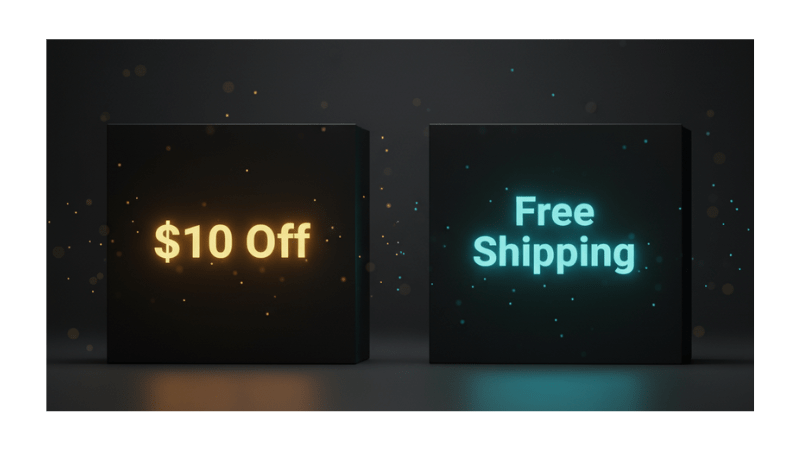
This section helps you decode the psychology underlying these offers — the perception that transforms an ordinary offer into a powerful sales driver.
- Free Shipping Offer Time vs Always-Free Shipping — one creates urgency, the other creates comfort.
- Free Shipping Offer Time vs Discount Offers — one removes pain, the other adds pleasure.
- Free Shipping Offer Time vs Limited-Time Sale — same urgency, different trigger.
- Free Shipping Offer Time vs Price Drops — timing vs pricing psychology.
- Free Shipping Offer Time vs Flash Sales — emotional calm vs purchase adrenaline.
- Free Shipping Offer Time vs Seasonal Promotions — short-term momentum vs planned cycles.
- Free Shipping Offer Time vs Loyalty Rewards — instant reward vs earned benefit.
- Free Shipping Offer Time vs Minimum Purchase Threshold — inclusive vs conditional generosity.
- Free Shipping Offer Time vs Storewide Offers — targeted action vs blanket incentive.
- Free Shipping Offer Time vs Coupon Codes — visible opportunity vs hidden unlock.
- Free Shipping Offer Time vs Everyday Low Price Strategy — emotional urgency vs rational trust.
- Free Shipping Offer Time vs Clearance Sale — psychological scarcity vs stock clearance.
- Free Shipping Offer Time vs Membership Perks — open-for-all vs gated exclusivity.
- Free Shipping Offer Time vs Referral Rewards — instant satisfaction vs delayed benefit.
- Free Shipping Offer Time vs Buy-One-Get-One — convenience trigger vs value amplifier.
- Free Shipping Offer Time vs Cashback Offers — zero waiting vs post-purchase benefit.
- Free Shipping Offer Time vs Bundle Discounts — simplified appeal vs calculated saving.
- Free Shipping Offer Time vs New Launch Offers — familiar comfort vs curiosity trigger.
- Free Shipping Offer Time vs Cart Abandonment Emails — proactive lure vs reactive recovery.
- Free Shipping Offer Time vs Retargeting Ads — emotional moment vs analytical precision.
- Free Shipping Offer Time vs Early Access Sales — open urgency vs privileged access.
- Free Shipping Offer Time vs Limited Stock Alerts — time scarcity vs quantity scarcity.
- Free Shipping Offer Time vs Subscription Discounts — instant reward vs recurring value.
- Free Shipping Offer Time vs Referral Discounts — brand-driven trigger vs social-driven trigger.
- Free Shipping Offer Time vs Personalized Offers — universal appeal vs individual pull.
- Free Shipping Offer Time vs Exit Popups — pre-emptive motivation vs last-minute persuasion.
- Free Shipping Offer Time vs Surprise Drops — predictable excitement vs spontaneous thrill.
- Free Shipping Offer Time vs Daily Deals — moment-based vs habit-based action.
- Free Shipping Offer Time vs Loyalty Tiers — short-term hook vs long-term structure.
- Free Shipping Offer Time vs VIP Access — inclusive urgency vs elite privilege.
- Free Shipping Offer Time vs Referral Programs — transactional motivation vs relationship-based motivation.
- Free Shipping Offer Time vs Affiliate Offers — brand-controlled vs third-party driven.
- Free Shipping Offer Time vs Trial Offers — tangible reward vs experiential test.
- Free Shipping Offer Time vs Gift-with-Purchase — cost-saving incentive vs value-adding incentive.
- Free Shipping Offer Time vs Early Bird Pricing — time reward vs cost advantage.
- Free Shipping Offer Time vs Flash Freebies — planned generosity vs impulsive delight.
- Free Shipping Offer Time vs Abandoned Cart Reminders — invitation vs reminder.
- Free Shipping Offer Time vs Social Media Giveaways — sales-driving vs engagement-driving.
- Free Shipping Offer Time vs Limited Access Codes — visible offer vs hidden privilege.
- Free Shipping Offer Time vs Holiday Promotions — routine expectation vs surprise appeal.
- Free Shipping Offer Time vs Lifetime Free Shipping Offers — temporary thrill vs permanent comfort.
- Free Shipping Offer Time vs Referral Invitations — immediate hook vs gradual conversion.
- Free Shipping Offer Time vs Minimum Spend Free Shipping — emotional generosity vs logical condition.
- Free Shipping Offer Time vs Cashback Loyalty Points — instant gratification vs delayed satisfaction.
- Free Shipping Offer Time vs Retention Discounts — attention grab vs re-engagement move.
- Free Shipping Offer Time vs Brand Anniversary Sales — customer-focused vs brand-centered.
- Free Shipping Offer Time vs First-Order Discounts — broad-time excitement vs new-customer entry.
- Free Shipping Offer Time vs Exit Intent Popups — emotional anticipation vs last-chance appeal.
- Free Shipping Offer Time vs Influencer Codes — brand-owned urgency vs influencer-created trust.
- Free Shipping Offer Time vs Preorder Discounts — instant shipping incentive vs delayed promise.
- Free Shipping Offer Time vs Referral Milestones — quick-win vs cumulative reward.
- Free Shipping Offer Time vs Personalized Recommendations — mass excitement vs 1:1 persuasion.
- Free Shipping Offer Time vs Abandoned Checkout Prompts — opportunity creation vs rescue operation.
- Free Shipping Offer Time vs Pay-Later Options — emotional trigger vs financial flexibility.
- Free Shipping Offer Time vs Limited Color Drops — cost reduction vs exclusivity addition.
- Free Shipping Offer Time vs Cart Timers — overall event vs individual pressure.
- Free Shipping Offer Time vs In-App Notifications — macro offer vs micro nudge.
- Free Shipping Offer Time vs Loyalty Bonuses — campaign energy vs routine benefit.
- Free Shipping Offer Time vs Urgency Popups — natural scarcity vs artificial countdown.
- Free Shipping Offer Time vs Personalized Emails — event-wide messaging vs custom tone.
- Free Shipping Offer Time vs Referral Links — store-wide opportunity vs friend-based access.
- Free Shipping Offer Time vs Bulk Order Discounts — time-driven appeal vs quantity-based logic.
- Free Shipping Offer Time vs Free Returns — forward motivation vs backward assurance.
- Free Shipping Offer Time vs Product Launches — tactical urgency vs narrative build-up.
- Free Shipping Offer Time vs Brand Collaborations — short-term conversion vs long-term reach.
- Free Shipping Offer Time vs Influencer Live Sales — time-window control vs influencer timing.
- Free Shipping Offer Time vs Seasonal Freebies — structured timing vs contextual gifting.
- Free Shipping Offer Time vs Abandoned Email Coupons — pre-offer push vs post-failure recovery.
- Free Shipping Offer Time vs Back-in-Stock Alerts — scheduled event vs reactive excitement.
- Free Shipping Offer Time vs Clearance Discounts — emotion-led movement vs stock-driven push.
- Free Shipping Offer Time vs Referral Free Shipping — time-based trigger vs relationship reward.
- Free Shipping Offer Time vs Gamified Discounts — clarity vs interactivity.
- Free Shipping Offer Time vs Mystery Discounts — known relief vs suspense surprise.
- Free Shipping Offer Time vs Limited Edition Launches — affordability trigger vs status trigger.
- Free Shipping Offer Time vs Brand Giveaways — conditional reward vs pure gifting.
- Free Shipping Offer Time vs Social Proof Campaigns — time urgency vs trust persuasion.
- Free Shipping Offer Time vs Countdown Banners — campaign structure vs visual cue.
- Free Shipping Offer Time vs Refer-a-Friend Bonuses — temporary benefit vs perpetual incentive.
- Free Shipping Offer Time vs Pay-What-You-Want Offers — fixed generosity vs flexible fairness.
- Free Shipping Offer Time vs Product Review Incentives — action-before vs action-after offer.
- Free Shipping Offer Time vs Personalized Discounts — one-size urgency vs tailored motivation.
- Free Shipping Offer Time vs Back-to-School Promotions — universal trigger vs audience-specific.
- Free Shipping Offer Time vs Anniversary Offers — external event vs brand milestone.
- Free Shipping Offer Time vs Referral Cashback — instant zero-fee reward vs long-term accumulation.
- Free Shipping Offer Time vs Cart Abandonment Discounts — proactive push vs reactive pull.
- Free Shipping Offer Time vs Bundle-Only Sales — simple motivation vs structured logic.
- Free Shipping Offer Time vs Free Samples — purchase push vs discovery push.
- Free Shipping Offer Time vs Pre-Launch Buzz — action now vs curiosity later.
- Free Shipping Offer Time vs Targeted Retargeting — emotional open-invitation vs algorithmic pursuit.
- Free Shipping Offer Time vs Influencer Giveaways — brand-owned excitement vs shared spotlight.
- Free Shipping Offer Time vs Flash Coupons — visible countdown vs hidden unlock.
- Free Shipping Offer Time vs Customer Appreciation Sales — universal push vs loyalty gesture.
- Free Shipping Offer Time vs Product Trials — reward-based motivation vs risk-free sampling.
- Free Shipping Offer Time vs Tiered Discount Events — simple clarity vs structured complexity.
- Free Shipping Offer Time vs Brand Collaboration Drops — brand-owned reward vs shared leverage.
- Free Shipping Offer Time vs Referral-Only Access — public urgency vs exclusive invitation.
- Free Shipping Offer Time vs Seasonal Clearance — psychological scarcity vs inventory cleanup.
- Free Shipping Offer Time vs Member Anniversary Freebies — time-bound reward vs occasion-based reward.
- Free Shipping Offer Time vs VIP-Only Promotions — open energy vs private exclusivity.
- Free Shipping Offer Time vs Storewide Holiday Offers — short-term campaign vs annual expectation.
Closing Line
The real power of free shipping offer time transcends the savings — it lies in the subtle cognitive cue it sends to the mind. Placed at just the right moment, it never pressures; it suggests softly, “this is the right choice,” moving purchase hesitation into action without the customer ever feeling nudged.
A limited-time window eliminates friction — it creates the impression that the brand understands consumer intent before they do, making the choice feel effortless and inevitable. It transforms ordinary offers into strategic incentives, blending urgency with thoughtful timing.
Therefore, if used strategically, it can revive slow sales periods, reward loyal customers, or give a new product launch the attention it deserves, proposing a value-driven gesture that connects on an almost invisible, refined level. Such an offer doesn’t just move orders; it moves customer perception, strengthens trust, and reinforces brand authority in subtle but powerful ways.
FAQs on Free Shipping Offer Time
1. How Do You Decide The Right Free Shipping Offer Time For Your Store?
Finding the right free shipping offer time depends on when your customers are most active and emotionally ready to purchase.
Look into your sales rhythm — see when people browse but hesitate to buy. Those are ideal windows to test your free shipping offers.
Use your analytics to identify those “almost converted” moments — where interest peaks but orders don’t follow. A timed offer there can tip the decision in your favor.
Start small, observe results, then adjust. The right timing grows out of patterns, not guesses.
2. What If Your Free Shipping Offer Time Reduces Your Profit Margins Too Much?
Free shipping can become expensive fast if you don’t plan it wisely.
Begin by reviewing your average order value and shipping cost per order. Use that data to set thresholds — for example, “Free Shipping on orders above ₹999.”
You can also limit the offer to lighter items, nearby delivery zones, or loyal customers.
Smart boundaries protect your profit while still making the offer feel generous.
Free shipping should create excitement for customers, not loss for your business.
3. Should You Announce Your Free Shipping Offer Time In Advance Or Make It A Surprise?
Both strategies work — just for different goals.
If you want to build anticipation, tease the offer early with countdowns or pre-launch emails. And if you want to spark instant action, surprise offers tend to convert better because they catch people off guard in a positive way.
A mix often works best — plan some ahead, surprise others occasionally.
Predictability builds comfort, but unpredictability builds excitement. The balance of both keeps engagement strong.
4. Why Do Your Customers Still Abandon Carts Even During Free Shipping Offer Time?
Free shipping reduces hesitation, but it doesn’t fix everything.
Customers may still abandon carts because of unclear delivery times, extra steps at checkout, or doubts about returns and trust.
If your “Free Shipping” banner lacks detail or looks temporary, it may cause confusion instead of confidence.
Focus on clarity and trust — show what’s included, remove unnecessary clicks, and reassure them with transparent terms.
When the experience feels safe and simple, free shipping becomes the final push — not the only reason to buy.
5. Is Your Free Shipping Offer Time More Effective Than Offering A Discount?
The effectiveness depends on what your audience values more — instant savings or mental ease.
Discounts catch the eye, but free shipping feels emotionally lighter. There’s no calculation, just satisfaction at checkout.
When shipping costs are noticeable, free shipping can outperform discounts because it removes that last barrier before purchase.
However, if shipping costs are already small, a discount might drive stronger urgency.
You can also blend both — “Free Shipping + 10% Off This Weekend.” Together, they build trust and excitement.
6. How Can You Stop Customers From Waiting Only For Your Free Shipping Offer Time?
Customers start waiting for offers when they see patterns.
To prevent that, create strategic unpredictability — don’t repeat offers at the same time each month.
Instead, connect them to meaningful triggers like festivals, product launches, or exclusive customer milestones.
Reward your loyal audience with early access to free shipping. This keeps it feeling special and earned, not expected.
When offers feel unpredictable yet valuable, customers act now instead of waiting for “next time.”
7. What Duration Works Best For Your Free Shipping Offer Time To Feel Urgent But Not Rushed?
Most stores find success with 48 to 72 hours. A shorter duration feels unfair; a longer one loses urgency. The goal is to create just enough tension to inspire quick action.
Use visual countdowns or progress bars to make time visible.
If you’re new, experiment with a 3-day window and study engagement.
Your data — not your assumption — reveals the ideal offer length for your audience.
8. How Do You Communicate The End Of Your Free Shipping Offer Time Without Losing Goodwill?
How you end an offer shapes how people remember your brand.
Avoid abrupt phrases like “Offer expired.” Use appreciation-driven messaging —
“Thanks for the amazing response to our Free Shipping Offer!”
A small grace period (like a few hours extension) can soften disappointment.
You can also hint at what’s next — “Stay tuned for something special soon.”
This keeps curiosity alive and turns closure into connection.
9. What’s The Best Way To Display Your Free Shipping Offer Time On Product Pages?
Visibility matters more than volume.
Place your Free shipping message near the “Add to Cart” button where purchase intent is highest.
Use short, direct phrases such as “Free Shipping – Ends in 48 Hours” or “Ships Free Today.”
Small icons, badges, or subtle animations can make it stand out naturally.
Keep colors calm and text consistent across pages — too much contrast looks spammy.
Your goal is not to shout “Free Shipping,” but to let it appear right where decision meets emotion.
10. How Do You Communicate The End Of Your Free Shipping Offer Time Without Losing Goodwill?
When closing a Free Shipping Offer, focus on gratitude instead of finality.
Thank your audience genuinely — “You made this event incredible.”
Follow up with a preview of upcoming offers to keep attention alive.
Even when the offer ends, emotional engagement should stay open.
A thoughtful ending ensures customers remember generosity, not absence.
