

Most e-commerce stores don’t struggle because their products aren’t good enough. They struggle because their store doesn’t appear clearly when a customer is quietly deciding whether to buy. Traffic comes in, pages get views, but sales feel inconsistent—and for beginners, that uncertainty can feel overwhelming.
When people use search engines, they aren’t looking to be convinced. They’re trying to reduce risk. They’re comparing options, checking alternatives, and asking questions they may not even fully articulate. Understanding how to increase ecommerce sales with seo starts with recognizing this mindset. SEO isn’t about pushing offers louder—it’s about showing up with clarity when doubt exists.
SEO works best when it supports decision-making. A shopper reading reviews, searching for comparisons, or looking for the “best option” is already close to buying. If your store appears at that moment with clear structure, helpful content, and answers that make sense, the purchase feels natural. Nothing feels forced. Nothing feels rushed.
For beginners, this is an important shift. SEO isn’t about attracting everyone. It’s about attracting people who already have intent and helping them feel confident enough to move forward. Even small amounts of the right traffic can outperform large volumes of unfocused visitors when your store aligns with how people actually search.
Learning to focus on usefulness over tactics ensures your pages simplify decisions rather than complicate them, making progress predictable. Want to understand exactly how SEO helps turn searchers into buyers—step by step? Read the full blog to learn practical, beginner-friendly, and implementable strategies for increasing eCommerce sales with SEO.
Table of Contents
What Is Ecommerce SEO?
Ecommerce SEO is about showing up exactly when your customer’s intent is highest. It’s not just a technical exercise or a way to rank higher—it’s a way to embed your store naturally into the decision-making process of buyers.
Shoppers today navigate a world of options, reviews, and comparisons. They aren’t passively browsing—they’re quietly asking, “Which product makes the most sense for me?” Ecommerce SEO ensures your store is visible, relevant, and trusted at that critical moment, guiding choices without ever feeling intrusive.

Think of it as strategic presence: your products become part of the conversation even before a shopper clicks, making the path from search to purchase smooth, confident, and almost effortless.
How SEO Is Different for Ecommerce
| Aspect | Traditional SEO | Ecommerce SEO |
| Purpose | To increase visibility and drive general traffic. | To convert search intent into purchases by targeting buyers at key decision points, focusing on decision-making rather than just attention. |
| Content Focus | Informational articles, guides, and blogs. | Product pages, category pages, reviews, FAQs, and comparison content that guide buyers’ choices and simplify complex decisions. |
| Keyword Strategy | Broad, informational, often high-volume searches. | Specific, transactional, and intent-driven phrases (e.g., “buy,” “best,” “comparison”) aligned with exact buyer decision moments. |
| Conversion Objective | Typically engagement metrics (clicks, time on page, backlinks). | Direct sales, add-to-cart actions, and checkout completions, with content acting as a silent salesperson building trust and influencing decisions. |
| User Journey Integration | Supports awareness and consideration stages. | Supports consideration, comparison, and purchase stages by mapping and influencing the buyer journey, reducing friction, and guiding decisions seamlessly. |
| Technical Complexity | Basic site structure and page speed. | Advanced technical layers: structured data, canonicalization, product schema, dynamic pages, inventory indexing—shaping how search engines present choices and building subconscious trust. |
| Content Lifespan | Evergreen blog posts or guides. | Dynamic product updates, seasonal campaigns, reviews, and FAQs, adaptive to changing inventory, trends, and buyer behavior patterns. |
| Performance Metrics | Organic traffic, rankings, backlinks, engagement. | Revenue-focused metrics: conversion rate, cart abandonment, average order value, repeat purchases—linking visibility directly to economic outcomes. |
| User Psychology Targeted | Curiosity, learning, and information-seeking behavior. | Desire, comparison, validation, and confidence in buying decisions; SEO anticipates questions and guides subconscious judgments to simplify purchasing. |
Implement 100 Ways for How to Increase Ecommerce Sales With SEO
1. Buyer Intent & Keyword Strategy
Every serious buyer leaves clues long before they place an order. Not on your product page—but in the questions they ask online while thinking things through. These searches aren’t about discovery anymore; they’re about narrowing choices, reducing risk, and making sure the decision feels right. That’s the moment where intent becomes visible.

At this stage, people don’t want marketing language. They want answers that sound like their own inner dialogue: comparisons, doubts, price limits, timing, and practical fit. The keywords they use reflect where they are mentally, not just what they want to buy. If you ignore those signals, and your store stays invisible during the most valuable part of the journey.
A strategy built around buyer intent treats search data like a conversation already in progress. It listens to how shoppers frame their decisions and positions your content as part of that thinking process. When you align with these intent-driven searches, you’re no longer chasing attention—you’re earning trust at the exact point a purchase decision is being formed.
How to Increase Ecommerce Sales With SEO using Buyer Intent & Keyword Strategy
- Rank for “best ___ for ___” keywords instead of broad product terms
- Capture comparison searches like “A vs B”
- Target “alternatives to ___” keywords
- Optimize for “is ___ worth it” searches
- Focus on problem-based keywords buyers search before checkout
- Use budget-based keywords (under ₹X / under $X)
- Target long-tail keywords with clear purchase intent
- Rank for seasonal buying searches
- Optimize for local + ecommerce hybrid searches
- Use search queries from on-site search data
2. Category Page Optimization
Most ecommerce category pages are treated like storage rooms—rows of products, a few filters, and little thought beyond organization. But for a shopper, a category page is often the first serious stop after a search. It’s where curiosity meets choice, and where confusion can quietly push someone away if the page doesn’t guide them.

At this point, buyers aren’t asking to be impressed; they’re asking to be helped. They want clarity, direction, and a sense that they’re in the right place. A well-built category page does more than display products—it frames decisions. It explains differences, highlights relevance, and removes the mental effort required to scroll, compare, and second-guess.
When category pages are designed with intent, they become persuasive without sounding salesy. They answer questions before they’re asked, reduce friction without obvious prompts, and naturally move visitors closer to a purchase. Instead of acting as passive listings, these pages start functioning like silent sales assistants—guiding, reassuring, and helping buyers choose with confidence.
How to Increase Ecommerce Sales With SEO using Category Page Optimization
- Turn category pages into buying guides
- Add decision-helping copy above product grids
- Optimize category filters for SEO-friendly URLs
- Create sub-category pages for use cases
- Rank category pages for “top” and “best” queries
- Add FAQs to category pages
- Internally link blogs directly to categories
- Reduce bounce rate on category pages to improve rankings
- Optimize category images with descriptive alt text
- Create comparison tables on category pages
3. Product Page SEO for Conversions
A product page is where intention turns into commitment—or quietly falls apart. By the time someone lands here, they already know what they’re looking at. What they’re really deciding is whether this product feels right for them. That decision rarely hinges on features alone. It hinges on clarity, reassurance, and the absence of unanswered questions.
Search behavior doesn’t stop once a product page ranks. Buyers continue evaluating—reading, scanning, validating—often with the same doubts they typed into the search bar moments earlier. If the page speaks in generic language or repeats what every other store says, it creates distance instead of confidence. The product may be right, but the explanation isn’t.
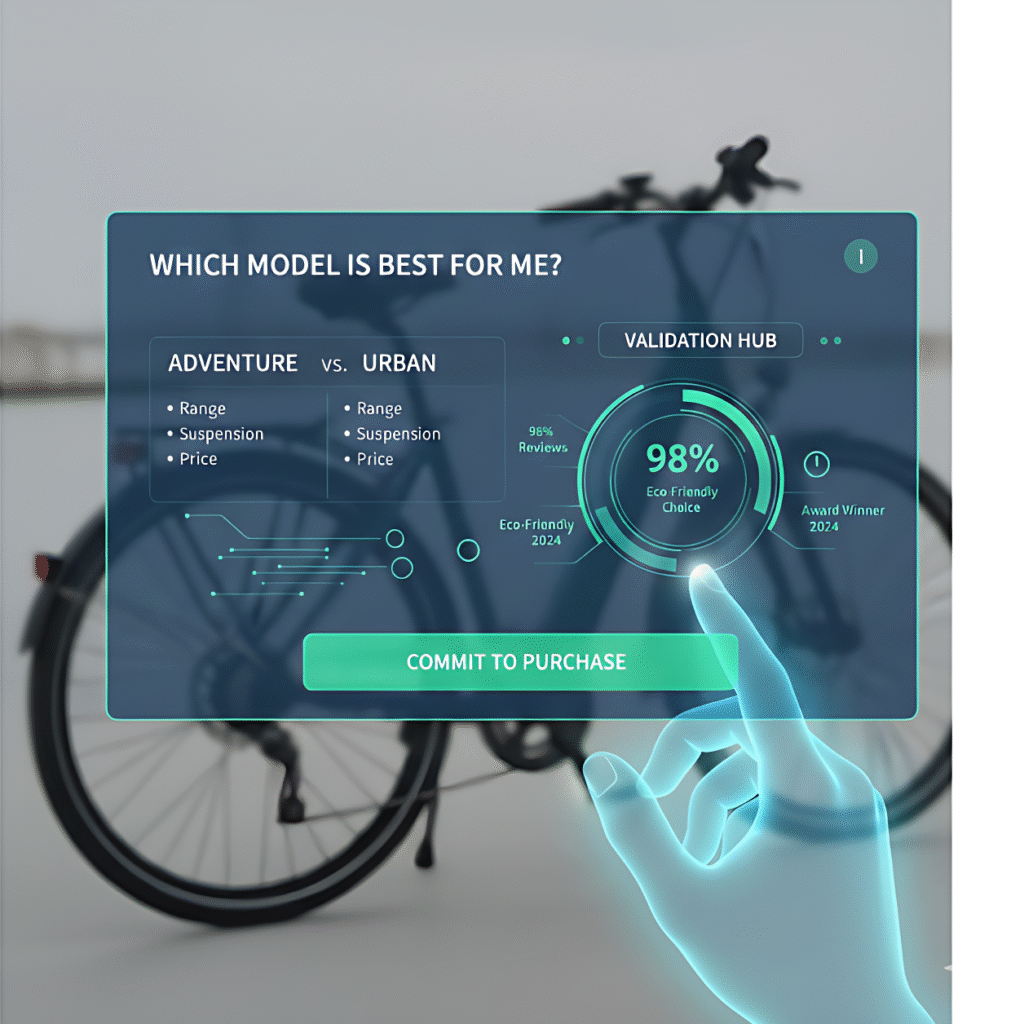
Conversion-focused product page SEO is about closing that gap. It aligns how products are described with how buyers actually think, search, and evaluate. When a page mirrors the buyer’s mindset—addressing uncertainty, context, and real-world use—it stops feeling like a listing and starts feeling like a decision already made.
How to Increase Ecommerce Sales With SEO using Product Page SEO for Conversion
- Rewrite product descriptions to answer buyer doubts
- Add FAQ schema to product pages
- Rank product pages for “reviews” searches
- Include “who this product is for” sections
- Optimize product titles for real search language
- Use unique content instead of manufacturer descriptions
- Add usage scenarios for SEO and clarity
- Include trust signals directly in SEO content
- Optimize image filenames for buyer keywords
- Rank product pages for long-tail variations
4. Content That Drives Sales
Sales-focused content doesn’t start by convincing someone to buy. It starts by understanding why they haven’t bought yet. In ecommerce, hesitation is more common than rejection. People pause not because they lack interest, but because they’re trying to make a decision they won’t regret. The content that performs best is the kind that steps into that pause and brings clarity.

At this stage, buyers are mentally organizing information. They’re comparing paths, questioning assumptions, and looking for signs that they’re choosing wisely. Generic blog posts fade into the background here. What stands out is content that feels situational—written for someone standing at a crossroads, not someone casually browsing.
When content is built for this moment, it functions like quiet guidance rather than persuasion. It anticipates doubts, frames choices, and replaces uncertainty with understanding. Done well, this kind of content doesn’t push products—it makes the next step feel obvious.
How to Increase Ecommerce Sales With SEO using Content That Drives Sales
- Publish buying guides that funnel into products
- Create SEO content for first-time buyers
- Write “how to choose” articles that pre-sell products
- Rank for post-purchase reassurance searches
- Create use-case-based SEO landing pages
- Build content for hesitant buyers
- Answer pre-sale questions through blog content
- Create decision-stage SEO content instead of awareness-only blogs
- Rank for “mistakes to avoid when buying ___”
- Create expert-style comparison articles
5. Internal Linking & SEO Flow
Most ecommerce sites already have traffic. What they often lack is direction. Visitors arrive, explore a page or two, and then disappear—not because the products are wrong, but because the journey feels unstructured. Internal linking is what shapes that journey behind the scenes.

When pages are connected with intention, a website starts to behave less like a collection of URLs and more like a purposeful experience. Each link becomes a signal, subtly narrowing choices and leading visitors toward pages that actually matter. This isn’t about adding more links—it’s about creating momentum.
A thoughtful internal linking structure aligns discovery with decision-making. It helps search engines understand what deserves priority, and it helps users move forward without friction. When executed correctly, the path feels natural—yet it consistently directs attention, trust, and intent toward the pages that drive real results.
How to Increase Ecommerce Sales With SEO using Internal Linking & SEO Flow
- Use internal links to guide users toward best sellers
- Link informational blogs to transactional pages
- Build topic clusters around revenue pages
- Use anchor text that signals buying intent
- Reduce orphan product pages with internal links
- Create SEO paths from blog → category → product
- Use breadcrumbs for SEO and usability
- Link from low-converting pages to high-converting ones
- Use internal links to highlight top-rated products
- Create internal comparison hubs
6. Technical SEO That Affects Sales
Technical SEO rarely gets credit for driving sales because its impact isn’t obvious at first glance. There are no bold headlines or compelling phrases here—only systems working, or failing, out of sight. Yet this layer of a site often decides whether a ready-to-buy visitor completes a purchase or abandons it halfway through.

When technical foundations are weak, even strong intent can collapse. Pages hesitate before loading, layouts misbehave on small screens, search engines miss important URLs, or outdated versions compete for attention. None of these issues announce themselves loudly, but each one chips away at confidence, patience, and visibility.
Sales-focused technical SEO is about removing invisible resistance. It ensures that nothing interrupts momentum when a buyer is ready to act and that search engines clearly understand which pages deserve prominence. When the underlying structure is sound, everything else—from content to conversion—has the space to perform at its best.
How to Increase Ecommerce Sales With SEO using Technical SEO That Affects Sales
- Improve site speed to reduce abandonment
- Fix mobile usability issues affecting conversions
- Optimize Core Web Vitals for better rankings
- Remove duplicate content that dilutes rankings
- Use clean, readable URLs
- Fix crawl issues blocking product pages
- Optimize pagination for SEO
- Prevent indexation of low-value filter pages
- Ensure product availability pages don’t lose rankings
- Use schema markup for better SERP visibility
7. Trust, Authority & Credibility
In ecommerce, skepticism is the default. Buyers arrive with unspoken doubts already formed—about quality, legitimacy, support, and whether the brand will still matter after the payment goes through. Before they compare prices or features, they assess something harder to quantify: credibility.

Search engines and shoppers evaluate trust in surprisingly similar ways. They look for consistency, depth, proof, and signals that a business knows its space well enough to be taken seriously. Thin pages, vague claims, or disconnected content raise doubt, even if the product itself is solid.
Building authority isn’t about sounding impressive; it’s about being unmistakably reliable. When a site demonstrates experience, clarity, and substance across its content, it reduces uncertainty at every step of the journey. That certainty—earned, not claimed—is what allows visibility to turn into belief, and belief into sales.
How to Increase Ecommerce Sales With SEO using Trust, Authority & Credibility
- Rank for brand + review searches
- Display trust signals that also improve SEO engagement
- Use UGC (reviews, Q&A) as indexable content
- Create authoritativeness through in-depth guides
- Optimize About and policy pages for trust
- Build topical authority around your niche
- Use expert content to improve E-E-A-T signals
- Rank for credibility-driven queries
- Reduce pogo-sticking through clearer content
- Build backlinks to money pages strategically
8. UX & Behavioral SEO
Search engines don’t just measure relevance anymore—they observe behavior. How long people stay, how easily they move, and whether they seem comfortable navigating a page all send signals. In ecommerce, these signals are shaped less by keywords and more by experience.
When a page feels heavy, cluttered, or mentally demanding, users don’t analyze why they’re uncomfortable—they simply leave. That exit becomes data. Over time, those small moments of friction quietly influence visibility, even if the content itself is strong.
Behavior-aware SEO treats usability as part of search strategy, not a separate discipline. It aligns structure, clarity, and flow with how people naturally read, scroll, and decide. When a site feels effortless to use, engagement improves organically—and rankings tend to follow.
How to Increase Ecommerce Sales With SEO using UX & Behavioral SEO
- Improve dwell time through better page structure
- Reduce cognitive overload to improve rankings
- Simplify navigation to improve crawl depth
- Improve readability for better engagement metrics
- Use SEO-friendly design that supports decisions
- Reduce unnecessary pop-ups harming SEO signals
- Improve on-site search UX for indirect SEO benefits
- Use clear CTAs that align with search intent
- Improve page hierarchy for scannability
- Optimize mobile checkout flow for organic traffic
9. Data, Tracking & Optimization
In ecommerce, not every click carries the same weight. Traffic alone tells a story; revenue tells the truth. Understanding which visitors convert—and what drives them—turns SEO from a numbers game into a strategic engine for growth.
Data becomes insight when it highlights where users encounter barriers and where opportunities thrive. Tracking revenue instead of just visits reveals which keywords actually lead to purchases, which pages stall interest, and which content can be improved or expanded.
Optimization shifts from speculation to deliberate action. Titles, meta descriptions, and page content are refined not for visibility alone, but for decision-making. When SEO aligns with measurable business outcomes, the site leads authentic buyers through predictable, profitable pathways.
How to Increase Ecommerce Sales With SEO using Data, Tracking & Optimization
- Track organic revenue instead of just traffic
- Identify keywords that drive actual sales
- Optimize pages based on conversion data
- Refresh content that ranks but doesn’t convert
- Expand high-converting pages with SEO content
- Use search console data to find buying intent gaps
- Improve CTR from SERPs using better titles
- Optimize meta descriptions for decision-driven clicks
- Identify drop-off points in organic funnels
- Align SEO KPIs with ecommerce revenue goals
10. Advanced & Strategic SEO Approaches
The most effective SEO isn’t about following trends—it’s about anticipating behavior. Buyers don’t arrive randomly; they move through predictable patterns of curiosity, evaluation, and choice. The sites that succeed are those that understand these patterns and design every page, snippet, and asset around them.
Advanced SEO takes a strategic approach. It identifies overlooked opportunities, captures attention even before a visitor clicks, and positions content to influence the customer’s pathway at the earliest stages. It’s less about chasing traffic and more about navigating purchase decisions, building assets that grow in value over time, and reducing reliance on temporary levers like paid campaigns.
When SEO is approached as a system—rooted in human behavior, preemptive insight, and long-term impact—it transforms a website from a collection of pages into a framework that consistently drives engagement, conversions, and sustained growth.
How to Increase Ecommerce Sales With SEO using Advanced & Strategic SEO Approaches
- Create SEO landing pages for micro-niches
- Capture zero-click searches with intent-driven snippets
- Build content for pre-comparison decision stages
- Use SEO to reduce dependency on paid ads
- Rank for future demand before competitors
- Optimize out-of-stock pages to retain SEO equity
- Create evergreen SEO assets that compound sales
- Use SEO to improve lifetime customer value
- Build SEO systems instead of one-off pages
- Design SEO around decision psychology, not algorithms
Final Thoughts
Reaching consistent sales in eCommerce is rarely about doing more—it’s about doing the right things with intention. SEO becomes meaningful when it helps your store show up in situations where buyers are already searching for direction. At that point, you’re not interrupting anyone; you’re stepping into a conversation that’s already happening.
For beginners, this is encouraging. You don’t need to overhaul your store overnight or master every SEO technique at once. Progress comes from paying attention to how people search, what they seem unsure about, and where your store can be clearer or more helpful. Each small adjustment—whether it’s improving how products are grouped, refining how pages are written, or addressing common questions—adds up.
Learning how to increase ecommerce sales with seo is really about building confidence on both sides. Shoppers feel more comfortable moving forward, and you gain clarity about what actually works. Over time, your store stops feeling invisible and starts feeling dependable. When people can find you easily and understand you quickly, sales become less of a surprise and more of a pattern you can grow with.
